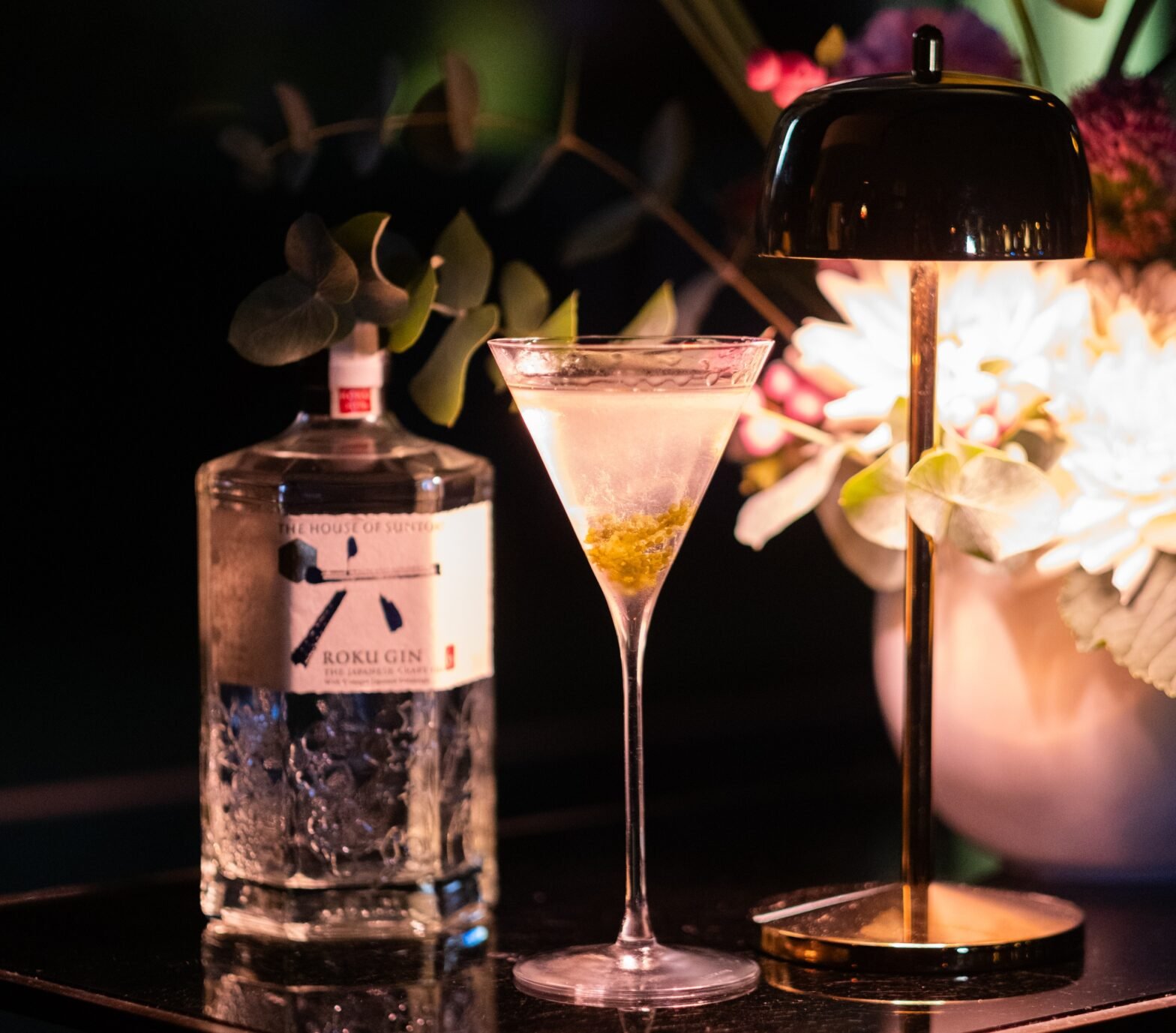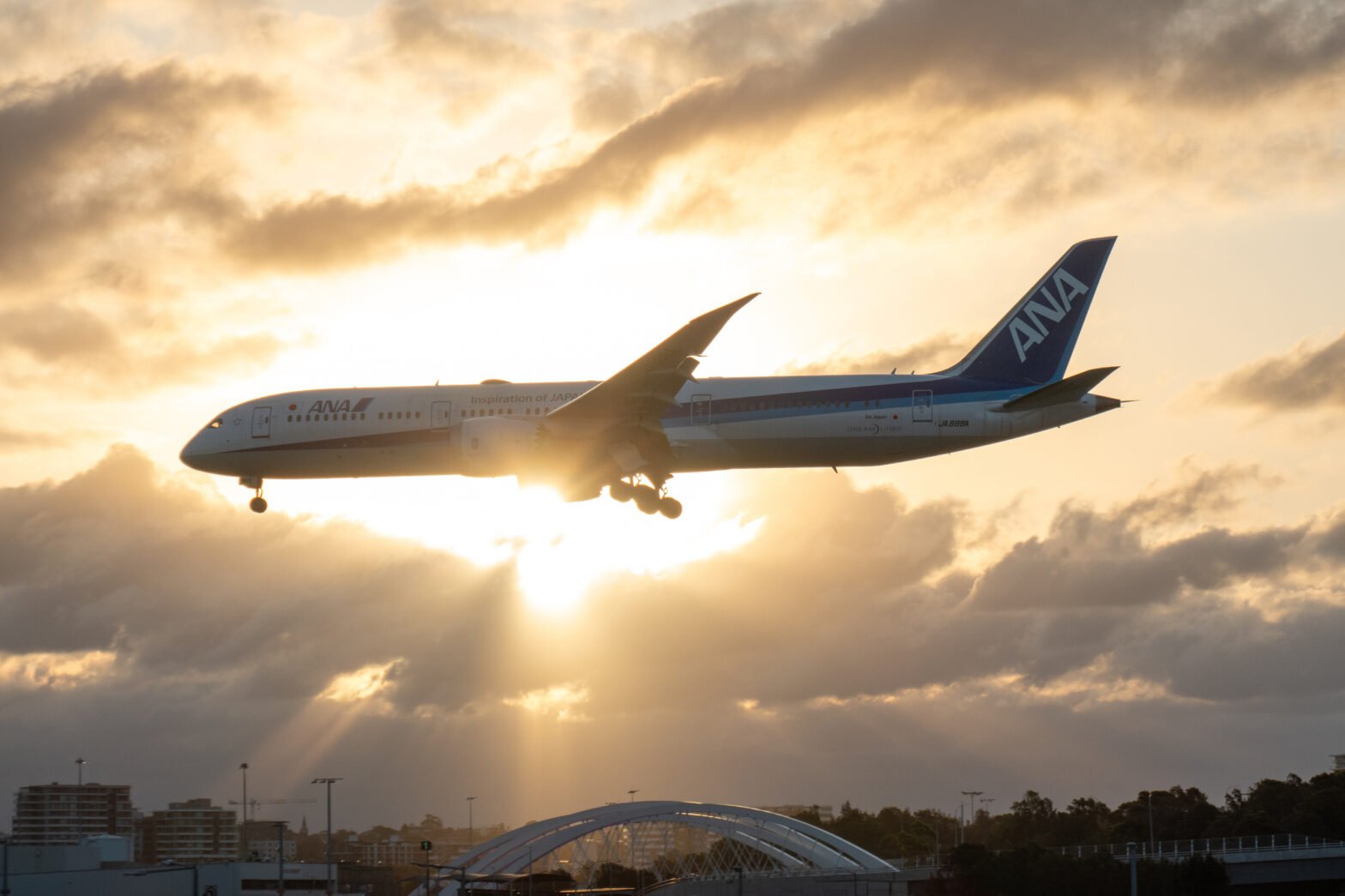
The Viking Rota was named on an Amsterdam pier, where a bottle of Norwegian aquavit was smashed against its hull while guests drank Veuve Clicquot, soprano Sissel Kyrkjebø performed, and other new ships joined by video from Luxor, Les Andelys, and Rostock. I had sailed with Viking before, but that ceremony led to my first river cruise with the line. The four nights aboard began with two days docked in Amsterdam, then took us south to Dordrecht and back to Amsterdam for the flight home to Milan.
Amsterdam dominates most Netherlands itineraries, and I still enjoy it, so I was surprised to find myself so taken with Rotterdam on the voyage’s last afternoon. Kinderdijk came the day before, and a gap in the Amsterdam schedule finally got me to Zaandam, a town so close to the capital that my delay in visiting it is hard to defend. Seeing the Netherlands from its rivers explained a lot about a country that has spent more than 700 years organizing daily life around keeping water where it belongs.
Zaandam Stacks Its Past
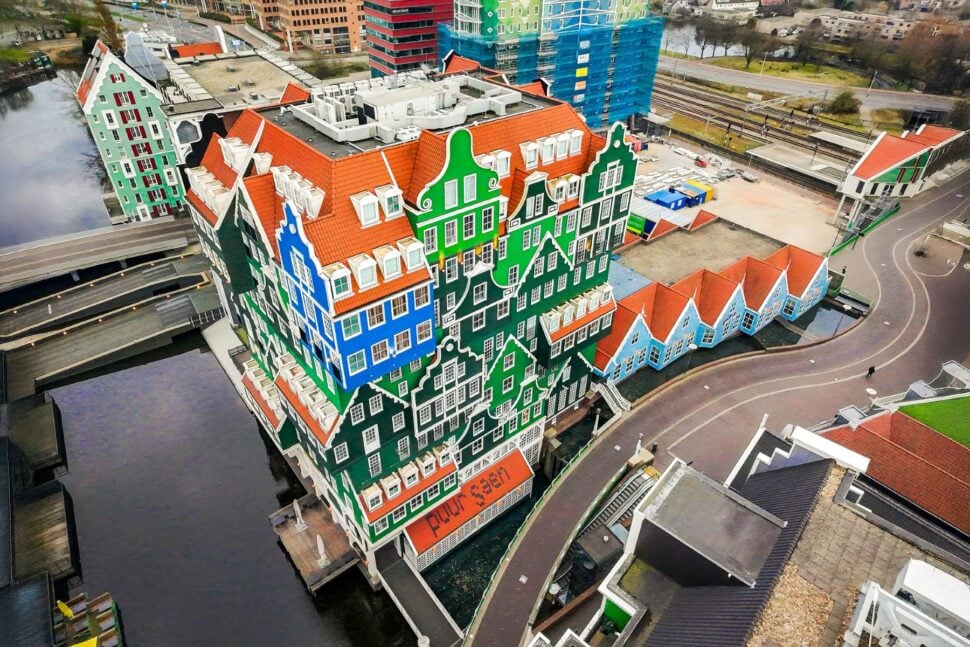
In my free time during those first days in Amsterdam, I took a side trip to Zaandam, outside Viking’s program. I liked shopping there, and the green buildings are far more striking in person than in photographs. The town’s showpiece is the Inntel Hotel, whose facade is made of nearly 70 Zaan-style houses in four shades of green, stacked 12 stories high, with one blue house referencing a Monet painting. Monet arrived in Zaandam on June 2, 1871, and wrote to Camille Pissarro that “there is enough here to paint for a lifetime.”
CNN featured the property in a roundup of 12 unusual hotels, and it would top my list too. The hotel belongs to a wider rebuilding of the town center, which reinstated the historic street layout and reconstructed a waterway. Zaandam answered a dull downtown by enlarging its own past.
Rotterdam Starts Over
Rotterdam’s architecture tells a different story, and part of what drew me to the city begins at the Willemsbrug, where Dutch marines defended the old crossing over the Nieuwe Maas in May 1940. On May 14, German bombers flattened almost the entire city center in about 13 minutes, leaving the historic Laurenskerk badly damaged. The original Willemsbrug was eventually replaced in 1981 by the striking red cable-stayed bridge designed by Cor Veerling.
I always enjoy Amsterdam’s historic canal houses, but Rotterdam’s modern architecture appealed to me just as much. Its rebuilding after World War II gave the city much of the character I found so interesting.
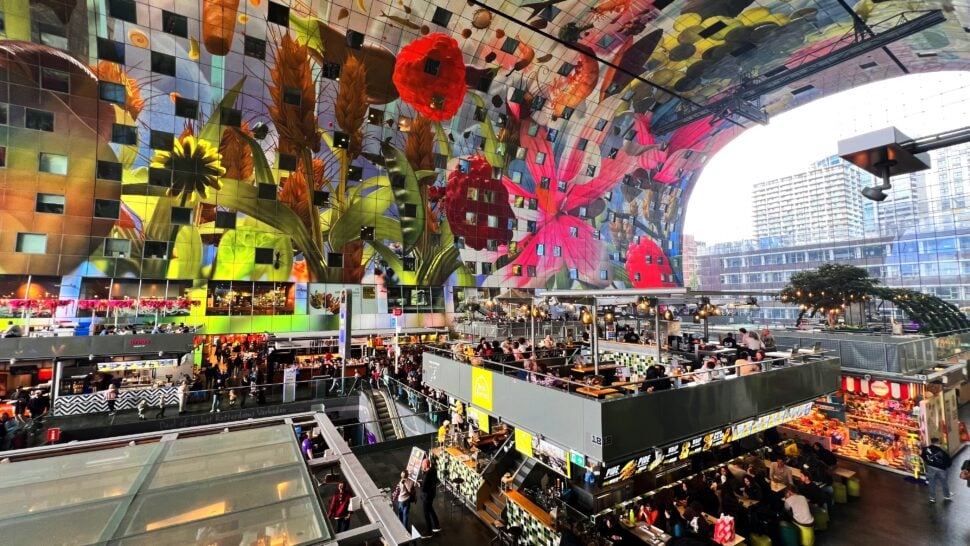
Yellow and tilted 45 degrees on pillars, Piet Blom’s 38 Cube Houses went up between 1982 and 1984 above a busy road. Blom meant each house as a tree and the complex as a forest, which is why it’s also called the Blaakse Bos. Most are private homes, so skip the window peering and head for the Kijk-Kubus museum house, keeping in mind that the steep stairs make it a hard visit for anyone with mobility issues. Across the way, the Markthal exists, in part, because of tighter European rules on selling meat, fish, and cheese outdoors, which gave Rotterdam an opening to build the country’s first covered market.
The Rotterdam firm MVRDV delivered it in 2014, with 228 apartments bent into a 131-foot arch over the stalls, some with windows looking down on the market hall. Arno Coenen and Iris Roskam covered the inside of that arch with a 118,000-square-foot mural of enlarged fruit, fish, flowers, and insects, so anyone buying fish stands under a much larger fish. The Markthal’s own site passes along the nickname “Sistine Chapel of Rotterdam.”
The Water Problem, From The Water
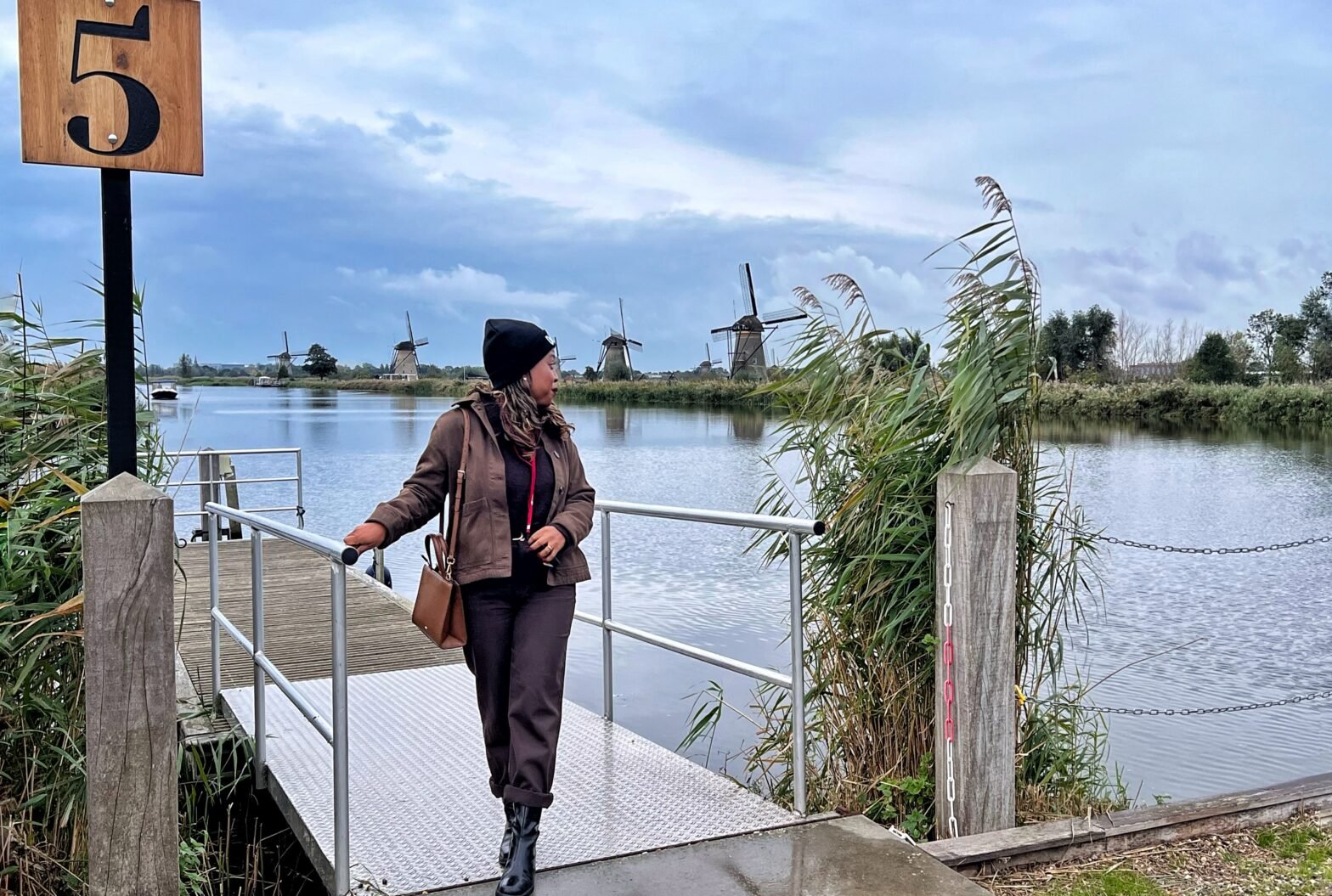
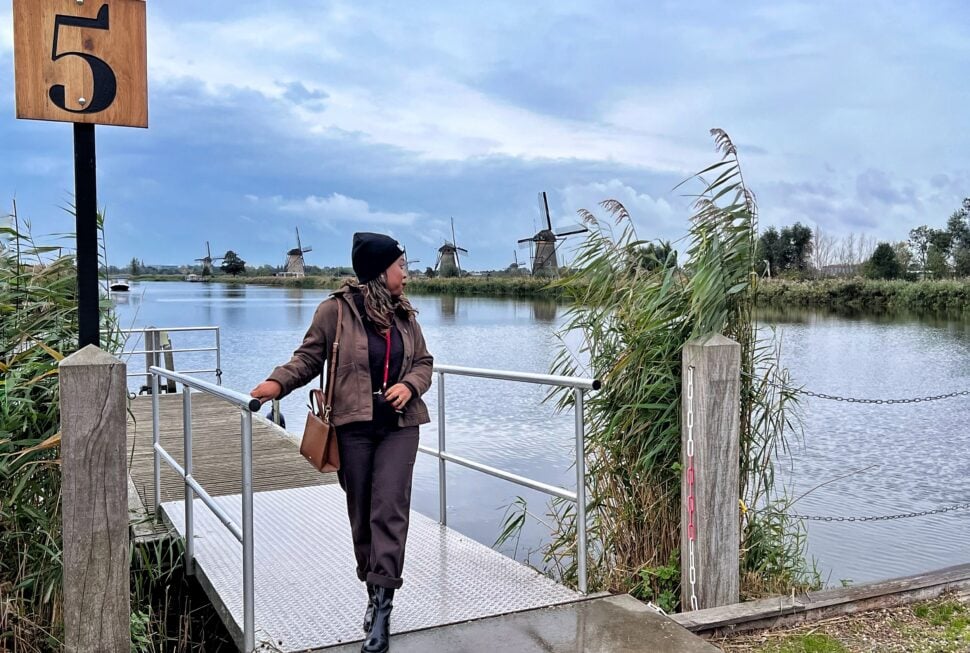
The morning after the naming dinner at the Koepelkerk, the Rota sailed for Dordrecht. That afternoon a guided excursion took us to Kinderdijk, in the Alblasserwaard, where Count Floris V united the local lords to manage the water in 1277. “Water always flows to the lowest point, and that’s Kinderdijk,” the town’s website explains. Kinderdijk’s 19 windmills, most of them built in 1738 and 1740, are the largest group in the country.
The Nederwaard and Overwaard water boards each built a row of eight and argued for centuries over who should maintain the embankment between them. Their mills pumped water up into storage basins, which drained into the river when levels allowed. Electric pumping stations do that job now, but all 19 mills are kept in operating condition as a fallback, and they went back to work during World War II after the German occupiers claimed the country’s diesel reserves. Families still live in many of the mills and handle their daily maintenance.
UNESCO, which recognized the site in 1997, calls it “powerful testimony to human ingenuity and fortitude,” a formal way of describing nearly a millennium of refusing to move. After a morning on the river, the logic was easy to see, since the whole system exists to keep farmland dry below rivers like the ones we had just sailed. The next morning’s walk in Delft, before Rotterdam that afternoon, included a visit to Royal Delft, founded in 1653 and the only survivor of more than 30 potteries working around Delft in that era.
The Sailings You Can Book
My voyage was a one-off built around the ceremony, and the closest match on sale is Holland & Belgium, a 10-day sailing from Amsterdam to Antwerp that calls at Hoorn, Dordrecht, Rotterdam, Kinderdijk, and Gorinchem, before continuing to Wesel in Germany, Nijmegen, and Maastricht. Tulips & Windmills, a 10-day round trip from Amsterdam, pairs Kinderdijk and Rotterdam on one day and adds Enkhuizen, Arnhem, Antwerp, Middelburg, and Veere, plus the Delta Works storm surge barrier in Zeeland.
It’s also among the itineraries planned for the Rota, alongside the eight-day Rhine Getaway from Basel to Amsterdam, which offers a Kinderdijk windmill and cheese-making excursion. However, Viking warns that stops vary by departure. Zaandam isn’t included in Viking’s itineraries, but it’s an easy day trip from Amsterdam, with trains from Amsterdam Centraal taking about 12 minutes. Rotterdam is on both Dutch itineraries, and next time I want more than an afternoon.