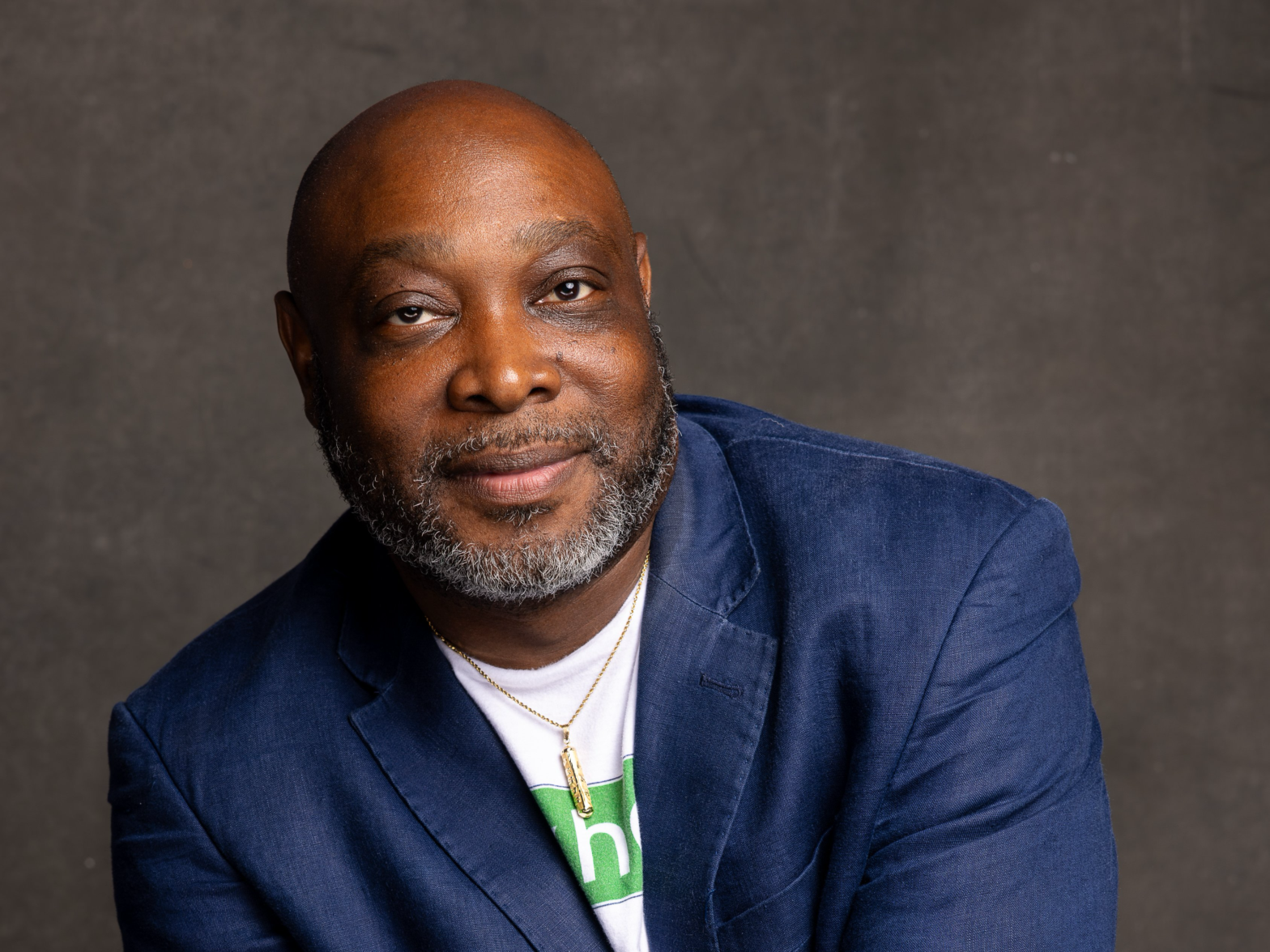
On flights that could stretch to 15 hours, Michael Parks got used to the people sitting next to him. Some wanted to chat. Others ate, fell asleep, and sometimes ended up with their heads on his shoulder. Parks never told any of them he was a federal air marshal.
“We look like passengers, we talk like passengers, we act like passengers, and we actually are passengers,” Parks told Travel Noire.
Born and raised in Atlanta, Parks served 12 years in the U.S. Air Force. He had been back home working for the federal government for less than a year when the September 11 attacks happened. He volunteered for the Federal Air Marshal Service soon after, cleared the interviews and medical and psychological assessments, and served 22 years before retiring.
The Job Is To Be There Without Being There
Throughout his career, people called Parks “Passenger 57,” after the 1992 thriller in which Wesley Snipes plays an airline security consultant who fights off hijackers.
The real work is quieter and depends on fitting in. Parks encourages colleagues who are still serving to get comfortable talking to strangers. Passengers regularly struck up conversations with him in terminals and on board, and he learned to talk about life and past experiences without revealing his job.
“You don’t wanna stand out, you don’t wanna be different,” he said. “You wanna look just like everybody else, you wanna talk like everybody else, you wanna act like everybody else.”
The job, as he puts it, is “to be there without being there.”
Long-haul assignments meant hours in the same seat. Marshals read, watched shows, and played checkers or dominoes against other passengers on the seatback screens.
“Sometimes you have eight hours, nine hours, 10 hours, 12 hours, 15 hours inside the tube on the plane,” Parks said. “So you gotta find something that’s gonna be constructive.”
Exhaustion came with the schedule. International flights often land between 5 and 7 a.m., when the body still thinks it’s the middle of the night. Parks and his partners learned when to hydrate, when to eat, and when to force themselves awake to match local time. Some layovers ended with 12 straight hours of sleep, others with an 8 a.m. city tour.
Other marshals have told government auditors much the same. Air marshals in all six field offices the Government Accountability Office (GAO) visited for a workforce review published in 2020 named health issues, including sleep deprivation, as a key quality-of-life concern.
How The Federal Air Marshal Service Operates
The service was created in 1961 to counter hijackers, and the first sky marshals were sworn in the following year. In 1970, Gen. Benjamin O. Davis Jr., the former commander of the Tuskegee Airmen and the first Black general in the U.S. Air Force (USAF), became the Department of Transportation’s (DOT) first director of civil aviation security, overseeing the sky marshal program during a wave of hijackings.
On September 11, 2001, the entire program had just 33 air marshals. The service grew into the thousands after the attacks and now operates within the Transportation Security Administration (TSA). Air marshals are assigned to selected flights based on security risks. Under federal law, TSA must deploy them on flights designated as high risk. A GAO report confirms that risk assessments inform deployment decisions, while federal regulations protect information about air marshal numbers, deployments, and operations. This confidentiality means passengers generally have little indication of whether an air marshal is aboard their flight.
Parks is careful about what he shares. “There’s a lot of things I can’t really talk about because of what we do is classified, but I will say this,” he said. “We turn into tourists, like the biggest tourists you ever wanna meet.”
Exploring The World Between Assignments
Once they checked into their hotels, Parks and his colleagues were free to explore their destinations.
“You’re just a paid government employee to be a tourist in other cities, in other countries,” Parks said.
Many marshals become serious foodies. Schedules arrive ahead of time, so by the time a team lands in London or Dubai, they already have a restaurant list, often built from Food Network episodes. When he kept hearing that Jamaica had the best KFC in the world, Parks decided to try it on his next trip there. In Amsterdam, a group of people his crew met downtown recommended the ribs at Café de Klos, and he estimates he has since pointed 300 or 400 people there. The marshals bought so many racks that they packed them up and flew them home.
Some air marshals have reached as many as 100 countries over their careers. Parks has been to 71 in all, including 15 or 16 in Africa. His schedule never sent him to Australia, and he still wants to go so he can say he has been to six of the seven continents.
Picking favorites is hard for him. Santiago, Chile, stands out for its valley restaurants and mountain tours that take you from 85-degree heat to snow in about 45 minutes. Barcelona in summer makes the list, and in Senegal he learned about African, American, and European history. For hospitality, Ghana wins.
“When I first went to Ghana, I actually thought people was pretending like actors,” Parks said. “’Cause I was like, ‘There’s no way everybody’s this nice.’”
What 22 Years In The Air Taught Him
Retirement gave Parks a different view of airport life. After years of flying as a federal air marshal, he now stands in TSA lines and sits through delays alongside everyone else. The experience has made him more sympathetic toward passengers, especially during busy travel weeks.
He still travels two or three times a month for his photography business, DayStar Photography. Much of the work keeps him moving around the United States, photographing corporate conferences, retreats, and events supporting veterans. Companies hire him to document their contributions to veterans’ organizations, and he said they come to him as a fellow veteran whose work they love.
His interest in photography started during a vacation with his mother in Destin, Florida, where they went on a dolphin-watching tour. He spent the ride staring at another passenger’s Nikon camera instead of watching the dolphins. A few months later, at Christmas, his mother bought him a camera kit and encouraged him to use his GI Bill, a U.S. military education benefit, to study photography at night.
Overseas, his camera gear always comes along. Street and nature photography fill his free time abroad, and downtown Madrid is one of his favorite places to shoot, along with Dubai, London, and Johannesburg.
Parks is now considering starting a YouTube channel with other former marshals, where travelers could ask for food, hotel, and shopping tips before a trip.
“We can tell you the best hotels to go to,” Parks said. “We can tell you the best restaurants.”
He never felt in danger anywhere he went. What stayed with him was the hospitality he found from one country to the next.
“We may look different, we may be different sizes, different shades, we may think different, but when it comes to being human, we’re all the same,” he said.
How To Become An Air Marshal
A TSA posting on USAJOBS, which closed at the end of October 2026, required applicants to be U.S. citizens or nationals, at least 21 years old, and appointed before turning 37, with exceptions for preference-eligible veterans and those with prior federal law enforcement service. Candidates qualified through a bachelor’s degree, three years of qualifying experience, or a combination of the two, and had to pass a polygraph, medical exam, and physical test before 22 weeks of residential training. The advertised salary range was $65,562 to $121,478 before locality adjustments.