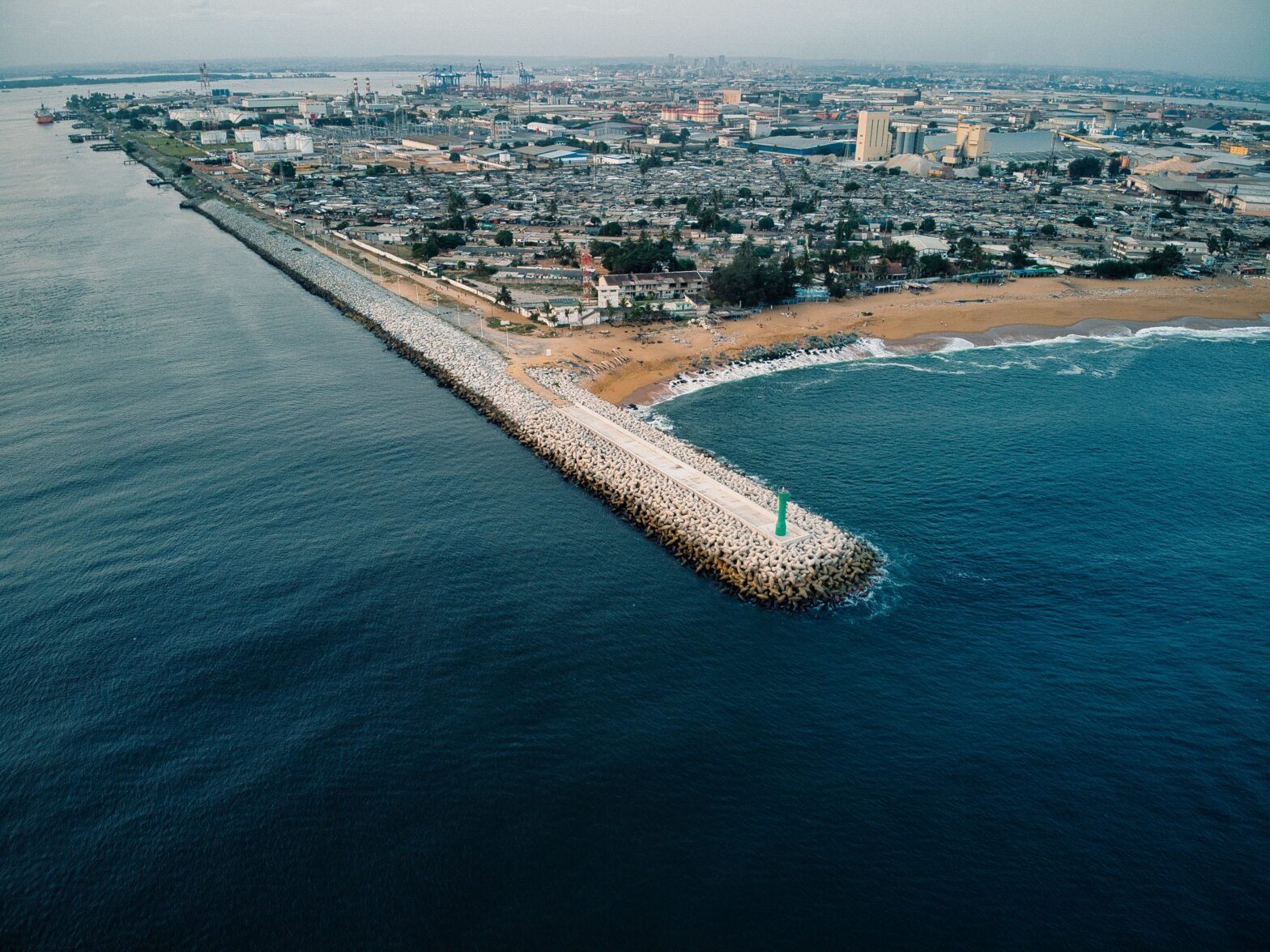
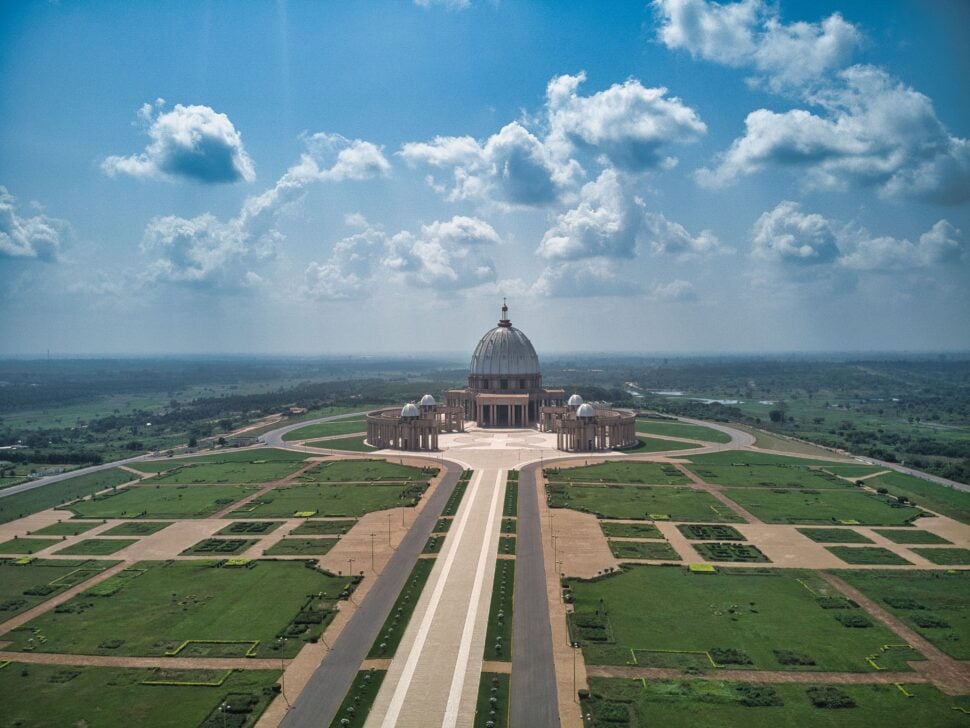
In terms of its tourism draws, Côte d’Ivoire is known for offering a unique, exciting mix of diversity, natural beauty, history, and old and new architecture. Yamoussoukro is home to the Basilica of Our Lady of Peace, the world’s largest church. The country’s landscape includes breathtaking beaches in the south, rainforest in Taï National Park (a UNESCO World Heritage Site), scenic trails in Banco National Park, and stunning waterfalls in the western city of Man. Additionally, the country boasts over 60 ethnic groups that contribute to its flavorful cuisine, history, local rhythms, and cultural richness.
Côte d’Ivoire is the country’s official name, while Ivory Coast is still commonly used as its English translation. The West African country borders the Gulf of Guinea to the south and is otherwise bordered by Liberia to the southwest, Guinea and Mali to the northwest, Burkina Faso to the northeast, and Ghana to the east. Côte d’Ivoire is home to an estimated 34 million people in 2026, according to Britannica. The official political capital is Yamoussoukro, while the economic capital and largest city is Abidjan.
Before planning or embarking on your trip to Côte d’Ivoire, read through the safety and travel information below.
Official Travel Advisories
As of this reporting, the United States government’s travel advisory for Côte d’Ivoire was last updated in February 2026. The State Department classifies the West African country as a “Level 2” zone where tourists should “exercise increased caution.” However, some parts of Côte d’Ivoire are noted as “Level 4” areas, meaning travelers are advised to avoid visiting altogether. Additionally, the U.S. government lists risk indicators noting concerns of potential crime, terrorism, unrest, limited or inadequate health services in Côte d’Ivoire, as well as piracy in the Gulf of Guinea.
The Centers for Disease Control and Prevention currently lists two travel health notices to consider before visiting Côte d’Ivoire. Last updated in September 2026, one of them is a “Level 2” advisory warning travelers to “practice enhanced precautions” against globally circulating poliovirus. The second is a “Level 1” advisory saying to “practice usual precautions” against measles. Before traveling to Côte d’Ivoire, travelers are encouraged to be up to date on their routine vaccinations, including those for COVID-19, hepatitis A, hepatitis B, typhoid, and yellow fever. Some travelers may also consider protection against chikungunya, cholera, meningococcal disease, mpox, and rabies. Travelers should also take prescription medicine to protect them against malaria. Overall, travelers should avoid sick people, bug bites, and contaminated water while abroad.
The Canadian government’s October 2026 updated travel advisory suggests that tourists “exercise a high degree of caution” in Côte d’Ivoire. In addition to flagging all travel around Côte d’Ivoire’s shared northern borders, tourists are advised to “avoid non-essential travel” near the country’s southwestern border with Liberia. The United Kingdom makes similar advisories against regional travel in certain parts of Côte d’Ivoire, specifically the borders with Burkina Faso, Mali, and Liberia.
Is Côte d’Ivoire Safe For Tourists And Solo Travelers?
The State Department says, “Côte d’Ivoire’s tourism industry is growing, but risks remain to travelers.” Additionally, the Canadian government says tourism infrastructure in Côte d’Ivoire “is limited outside of major cities.”
Crime
Theft (robberies, burglaries, carjackings, etc.) and violent crimes can occur. If an attempt is made, cooperating and handing over the wanted goods can be lifesaving. Also protect yourself as best you can against bag snatching and pickpocketing.
Transportation
Rideshare services are available and can be more convenient for tourists to take than taxis. The U.S. government advises tourists not to take “woro-woros” or “gbaka” in Côte d’Ivoire. For convenience, consider having your accommodations arrange your transportation or hiring a private driver for the duration of your stay.
If the car you’re in is stopped at a security checkpoint, politely cooperate with the authorities.
Bank Safety Information
Credit cards will likely be accepted at major/established restaurants, hotels, and businesses. That said, having cash to make purchases is a safe bet. Some ATMs may charge hefty fees, and power outages may affect your ability to withdraw cash.
Never share your personal or banking information with a stranger.
Health
Though public ambulance rides in Côte d’Ivoire are free, privately operated ones will charge you. Worth considering, a taxi or private driver may be faster and more convenient ways to the hospital. You’ll likely need to pay upfront, in cash, to receive medical services. Hospitals may be minimally staffed, under-resourced, undersupplied, and/or lack those who speak English.
When traveling with your medications, make sure that they are in their original packaging and that you have your doctor’s prescriptions.
Common Scams To Be Aware Of In Côte d’Ivoire
The State Department claims “Internet romance and financial scams are increasingly prevalent in Côte d’Ivoire.” The authority also alleges that scams in the West African country can be initiated via internet postings, online profiles, unsolicited emails, and letters. Scammers reportedly often pose as U.S. citizens in need of help.
Common scams include romance scams and sextortion (be wary of using dating apps), money transfers, gold purchases, job offers, and more.
Avoid using public Wi-Fi if you can, as in worst-case scenarios, it can make you and your personal information vulnerable to scammers.
How To Stay Safe In Côte d’Ivoire
Before visiting, invest in travel insurance and consider coverage for medical emergencies, trip cancellations, and evacuation assistance. If you’re an American citizen, also consider registering your trip with the State Department’s Smart Traveler Enrollment Program. The latter can provide important local updates during your visit and help authorities locate you in an emergency. Moreover, check out the latest available travel advisories for Côte d’Ivoire.
Regularly monitor local news to stay updated about what’s happening, the weather, traffic, and important updates. Avoid protests and demonstrations. Don’t be flashy with your cash or jewelry, and keep those and your important valuables (like your travel documents) safely stored during your trip. If you’ll be at coastal beach destinations, always check the swimming conditions beforehand. Another safety precaution is making sure someone back home has an updated version of your itinerary at all times. As with anywhere you are, always stay mindful of your surroundings. If you are robbed, do not try to fight or physically resist the assailants.
If you’re traveling to Côte d’Ivoire with a child, it’s imperative that you have all the necessary travel documents. In addition to their passport, parents/guardians should also have a copy of evidence of their relationship, such as a birth certificate. If a parent/guardian isn’t traveling with the children, they’ll need to send the minor with a notarized permission letter authorizing the child’s travel. Moreover, if one parent is traveling with a child, they’ll need a notarized consent letter from the minor’s other parent or provide evidence of their sole custody.
Being aware of and following the local laws in Côte d’Ivoire is a must.
For LGBTQ+ travelers, while homosexuality in Côte d’Ivoire isn’t criminalized, designated protections for the community aren’t in place, and discrimination may occur.
Travelers with disabilities should be aware that accessibility in Côte d’Ivoire is currently limited. Also, air pollution in the country could particularly affect the young and old, as well as those with certain conditions.
Where To Stay In Côte d’Ivoire
Travelers can enjoy both casual and luxury travel in Côte d’Ivoire.
If you’re staying in Abidjan, Lepic Villa Hotel is a celebrated Black-owned option worth consideration. In Grand-Bassam – a coastal UNESCO World Heritage Site with lots of French colonial history – Chef Rōze Traore’s La Fourchette de Rōze 6-room boutique hotel is a standout pick.
Best Time To Visit Côte d’Ivoire
Most travelers will agree that the best time to visit Côte d’Ivoire is during its dry season from November through March. During that time, temperatures are warm, with sunshine and low humidity.
If you are visiting in the rainy season between June and September, be aware that flash flooding can occur in low-lying areas.
People Also Ask
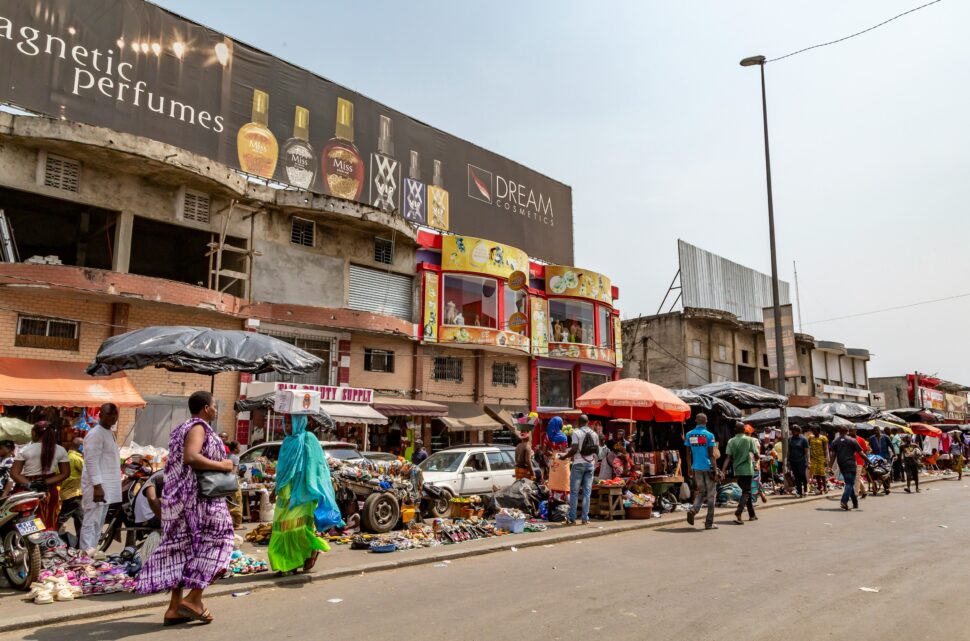
Is it safe to walk in Abidjan?
Yes, walking in Abidjan is generally safe during the day. However, at night, tourists are encouraged to be aware of their surroundings and avoid walking alone.
Do they speak English in Ivory Coast?
French is the official language there, and English isn’t widely spoken. However, in touristy areas and resort towns, English-speaking visitors may fare better.
Is the Ivory Coast tourist-friendly?
Particularly in its major hubs and resort towns, Côte d’Ivoire is tourist-friendly in terms of things to do and hospitality industry. Visitors should just keep in mind that the country’s tourism infrastructure is still developing.
Should You Still Travel To Côte d’Ivoire?
Travelers need to exercise their judgment regarding whether visiting Côte d’Ivoire will be safe for them during the time that they’d like to travel there. As mentioned, the country currently has significantly different levels of travel advisories issued from different Western governments. Additionally, travel plans and personal circumstances could vastly impact the experiences that a tourist will have on the ground in Côte d’Ivoire.
Things to think about ahead of your visit include:
- the latest travel advisories
- the safety and security at your accommodations
- whether you know and trust someone local to your destination (in case you need help or support)
- your current overall health
- your accessibility needs