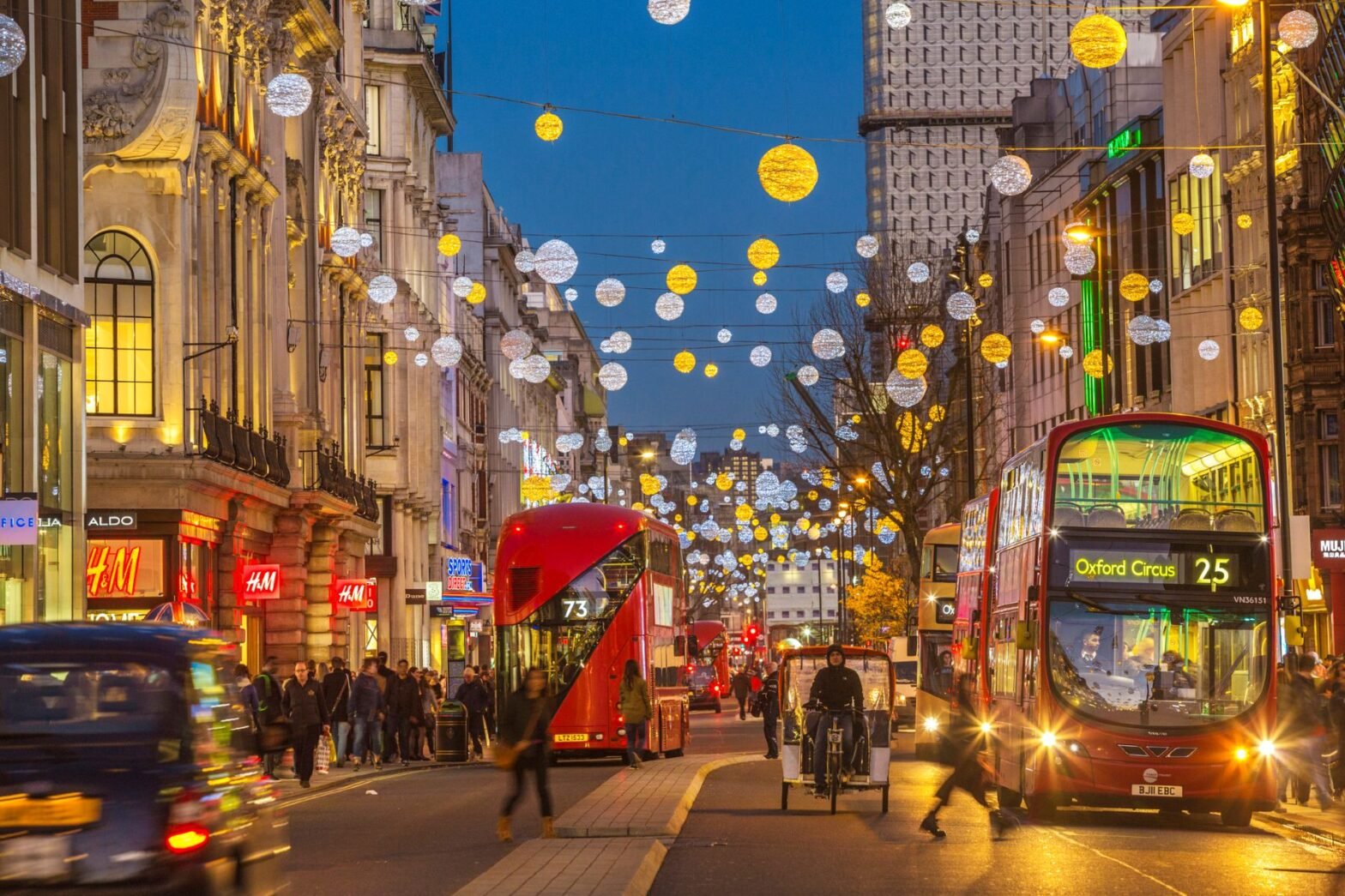
London’s Oxford Street draws roughly half a million visitors a day, bringing shoppers from across the world to department stores, international retailers, and the surrounding West End. The crowds have made it one of the capital’s most prominent shopping destinations, but they have also complicated how people should move through the area. Buses and taxis continued to use the street even as officials debated plans to give pedestrians more space. Previous attempts to remove traffic stalled amid disagreements over road access and concerns that diverted vehicles would overwhelm neighboring streets.
Meanwhile, the shopping district has faced pressure from changing retail habits and the loss of several major stores since the pandemic. Those issues have kept Oxford Street’s future on the city’s agenda for years. On October 26, a substantial stretch of the street became permanently traffic-free, altering a familiar part of central London just as the year’s busiest retail season approaches.
Which Part Of London’s Oxford Street Is Now Car-Free?
The closure covers roughly 0.6 miles between Orchard Street, near Selfridges, and Great Portland Street. London City Hall confirmed that buses, taxis, rideshare vehicles, bicycles, scooters, and pedicabs are now prohibited from entering the designated area. Private vehicles are also barred. The restriction applies around the clock, though vehicles can still cross Oxford Street at certain intersections, including Regent Street at Oxford Circus, as the BBC explained.
Mayor Sadiq Khan called the change “a truly momentous occasion for the capital” in his October 26 announcement. His administration has pursued the project as part of a broader effort to attract visitors, investment, and businesses to the West End. The decision followed public consultations that City Hall says showed roughly seven in ten respondents supported the plans. However, some residents have opposed the project, citing concerns about additional congestion and noise. Buses and other vehicles have been diverted onto surrounding roads, including Wigmore Street and Cavendish Place. Transport for London says it will monitor traffic conditions.
Mobility scooters remain permitted in the pedestrian zone, and emergency services retain access at all times. Delivery and service vehicles may enter on specified routes between midnight and 7 a.m. Transport for London warns that drivers who violate the restrictions could receive a penalty notice.
What The Oxford Street Changes Mean For London Visitors
Travelers who previously relied on buses stopping directly on Oxford Street will need to use relocated stops. New stops on Wigmore Street, Henrietta Place, and Cavendish Place sit roughly 650 feet from the traffic-free section. Transport for London has published updated bus stop information and recommends checking routes before traveling. The Elizabeth line and London Underground continue to serve the area, while some taxi stands and accessible parking spaces have been relocated to nearby streets. TfL says it will provide directions to nearby public transportation, including step-free access at Bond Street station.
The road closure does not mean the finished pedestrian plaza is ready. Officials are limiting construction ahead of Christmas and plan additional improvements through spring 2027. These include more than 50 trees, over 100 seats, improved lighting, and two public squares. Sections of roadway will also be raised to sidewalk level to improve accessibility.
Officials will use feedback from pedestrians, businesses, residents, and accessibility groups to guide the permanent design. Visitors can submit their experiences to the Oxford Street Development Corporation as the project progresses. Dee Corsi, chief executive of the New West End Company, emphasized the importance of “getting the delivery right” in an October 26 statement, calling for a safe, clean, accessible, and welcoming shopping district.