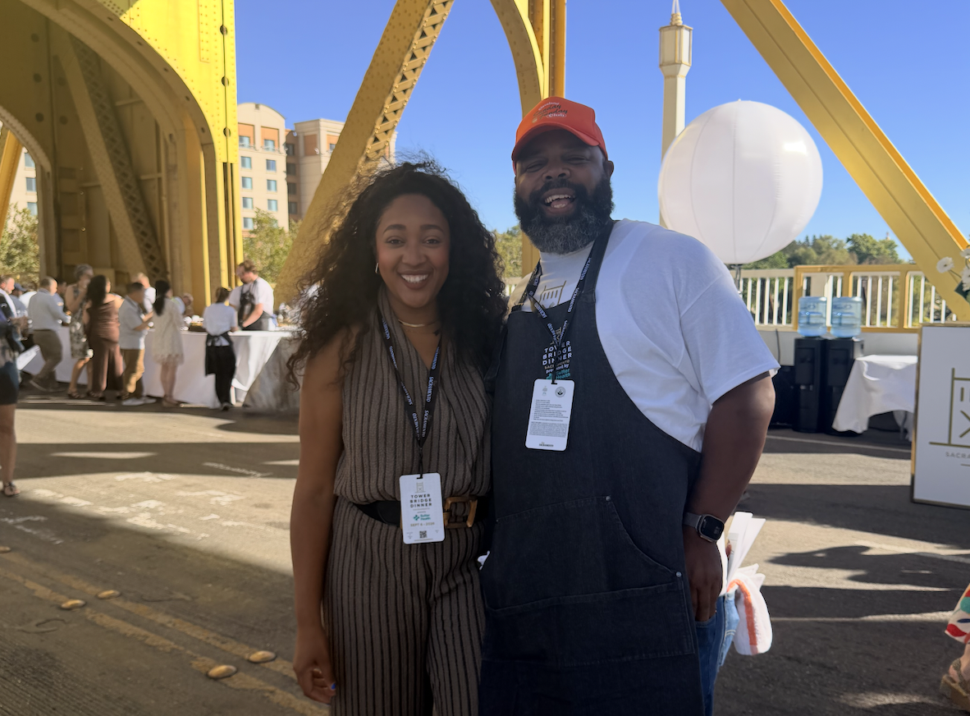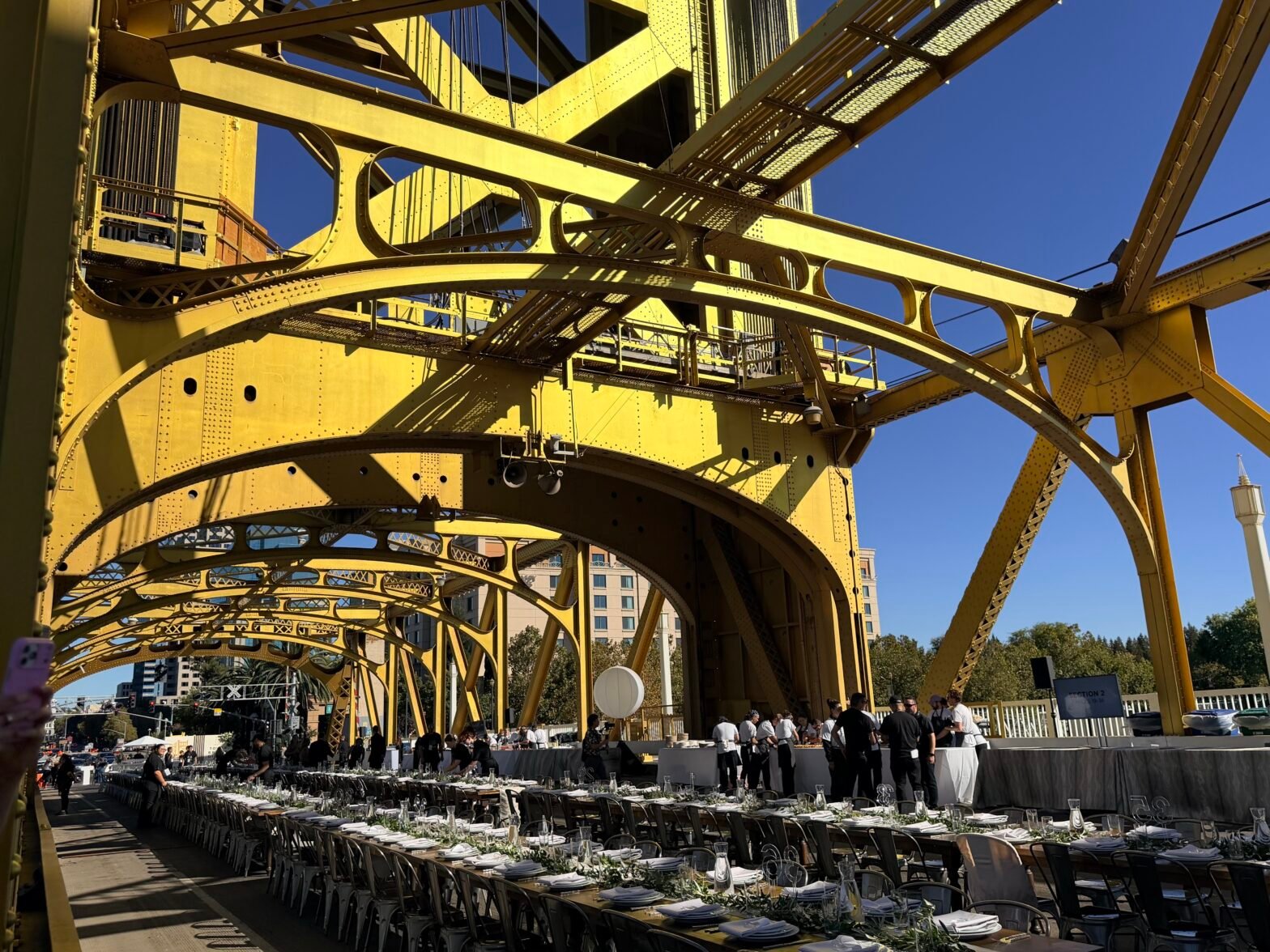
It’s a Sunday evening in September, and traffic has stopped on one of Sacramento’s most recognizable landmarks. The golden Tower Bridge is now a dining room for the one-of-a-kind Tower Bridge Dinner. Wooden tables are dressed with green-and-gold runners and sprigs of eucalyptus. The table is set with white dinnerware for a family-style dinner for nearly 850 guests.
Some of the city’s best chefs prepare the meal using ingredients from one of the world’s most fascinating and important agricultural regions. According to Valley Vision, the Sacramento region has 1.5 million acres of farmland. Its farmers produce more than 160 crops and food products that ship around the world. Its impressive and rich soils have earned it the title, “America’s Farm-to-Fork Capital.”
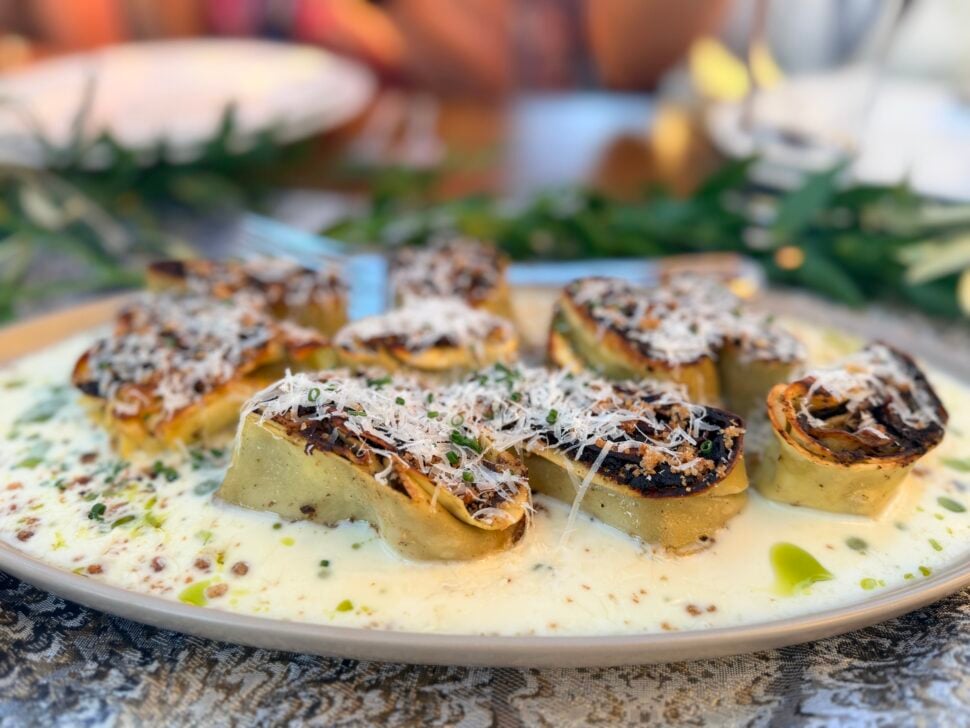
Now in its 14th year, the Tower Bridge Dinner is a fundraiser and one of the country’s most exclusive immersive dining experiences. Tickets are sold through a random public drawing at $350 each, or $700 a pair. Proceeds support Visit Sacramento’s farm-to-fork programs and scholarships for farmworkers’ children.
But for Chef Dennis Sydnor, Jr., who was one of the lead chefs in 2023, the view from the bridge carries more than a six-course meal (counting appetizers and dessert). It’s more than the perfect sunsets and incredible skyline views. As one of a handful of Black chefs in the city, the dinner is a bigger stage for Sacramento’s diverse culinary scene.
Rewriting Who Gets To Cook
Visibility matters to Chef Sydnor, a private chef and former chef at the always-busy BAWK!, a Black-owned restaurant owned by Rob Archie. He remembers being one of the few Black chefs selected for the dinner, helping break down barriers for chefs of color and chefs from marginalized communities by challenging the organizers’ requirement that participants have a brick-and-mortar restaurant.
“Traditionally, the bridge dinner had been only for chefs who had restaurants,” he says. “Organizers have now opened it up a little bit more, especially for the chefs who are creating the appetizers and desserts on the bridge. It doesn’t matter if you have a brick-and-mortar as long as people can find the chefs.”
Chef Sydnor took a back seat this year to help other chefs with their big moment as they prepared beautiful plates for the hungry crowd, but he wasn’t the only Black chef on the bridge for 2026.
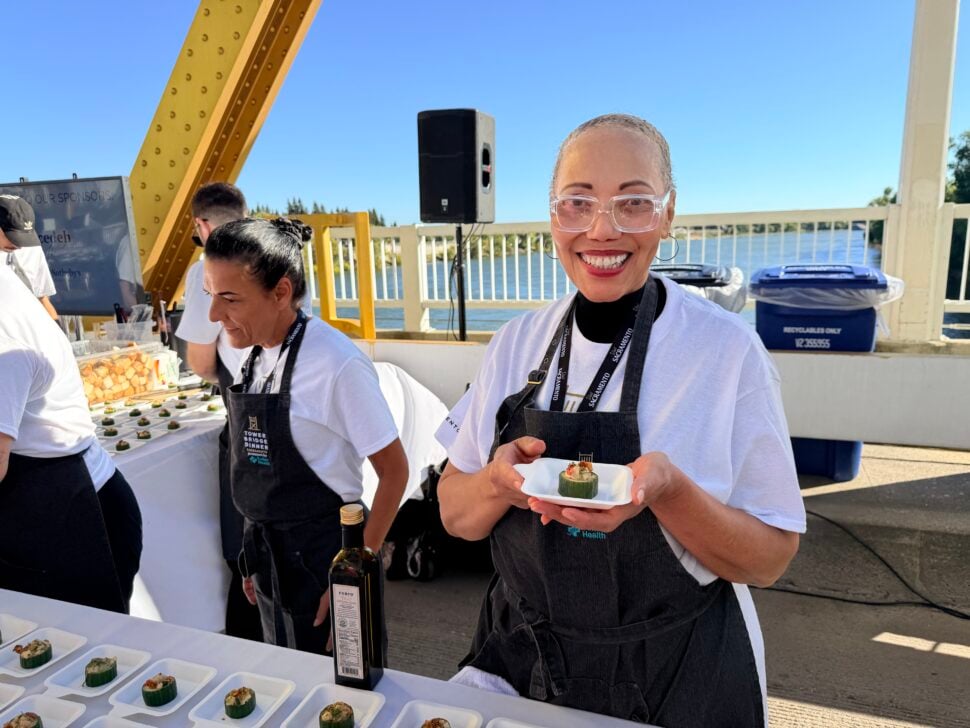
Plant-based private Chef Nina Curtis of Plant’ish & Co. contributed an appetizer of cucumber cups with hearts of palm ceviche. Chef LaQueanya Henry, co-owner of Sugar Coated Cupcakes, served small cups of fig honey-vanilla cheesecake layered with almond shortbread crumble. Pastry Chef Angela Harris of Midtown Bakery served her signature cinnamon-nutmeg French puffs, along with three other sweet treats. All three businesses are Black-owned.
Their presence stands out in a city where Black-owned restaurants are hard to find. While the data varies, Oyster Link estimates roughly 1,658 restaurants in the city. Local news outlet, the Sacramento Bee, reported that fewer than 50 are Black-owned. That would put Black-owned restaurants at about 3 percent of the total, or less. The numbers could be lower since the COVID-19 pandemic hit Black-owned businesses disproportionately hard.
Where The West End Stood
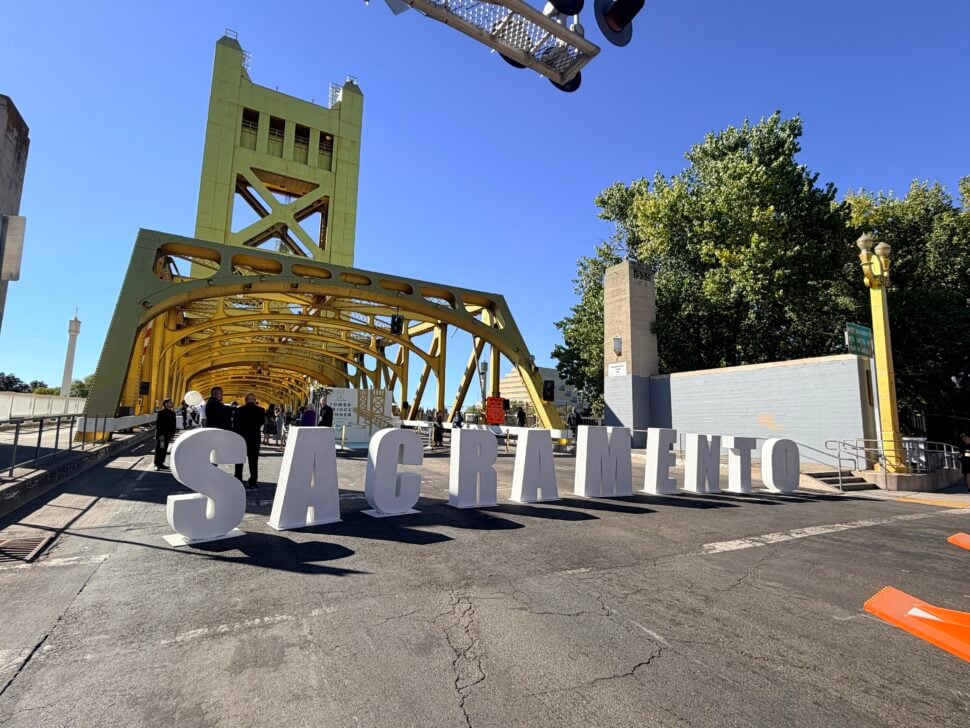
Chef Sydnor also sees the Tower Bridge setting as a reminder of how far Black, Brown, and immigrant communities have come. According to Think Progress, racial covenants in Sacramento barred non-white residents from new subdivisions and effectively confined them to the West End. By 1950, the neighborhood was home to seven out of every 10 non-white Sacramentans.
“This location where the dinner is held was historically an African American, Chinese, Japanese, Hispanic, and immigrant community,” Sydnor says. “When you look at the history of Sacramento, specifically, people of color, what is now the Capitol Mall area was where our businesses once thrived.”
The bridge now sits at the foot of the Capitol Mall, at the edge of the former West End.
It’s a story that is all too familiar across the country: redevelopment devastated those businesses and communities. Sacramento city leaders forced Black and minority immigrant communities out of the historic West End in what historically was called a “slum clearance.” Demolition began in the 1950s to replace what officials considered “blighted” with what stands there today: Interstate 5, downtown retail centers, and the Capitol Mall “Grand Gateway.”
Sydnor is now cooking in the shadow of that history and not shy about what it means.
“Being here on the Tower Bridge feels like retribution for the people who tried to keep us away,” he says, smiling.