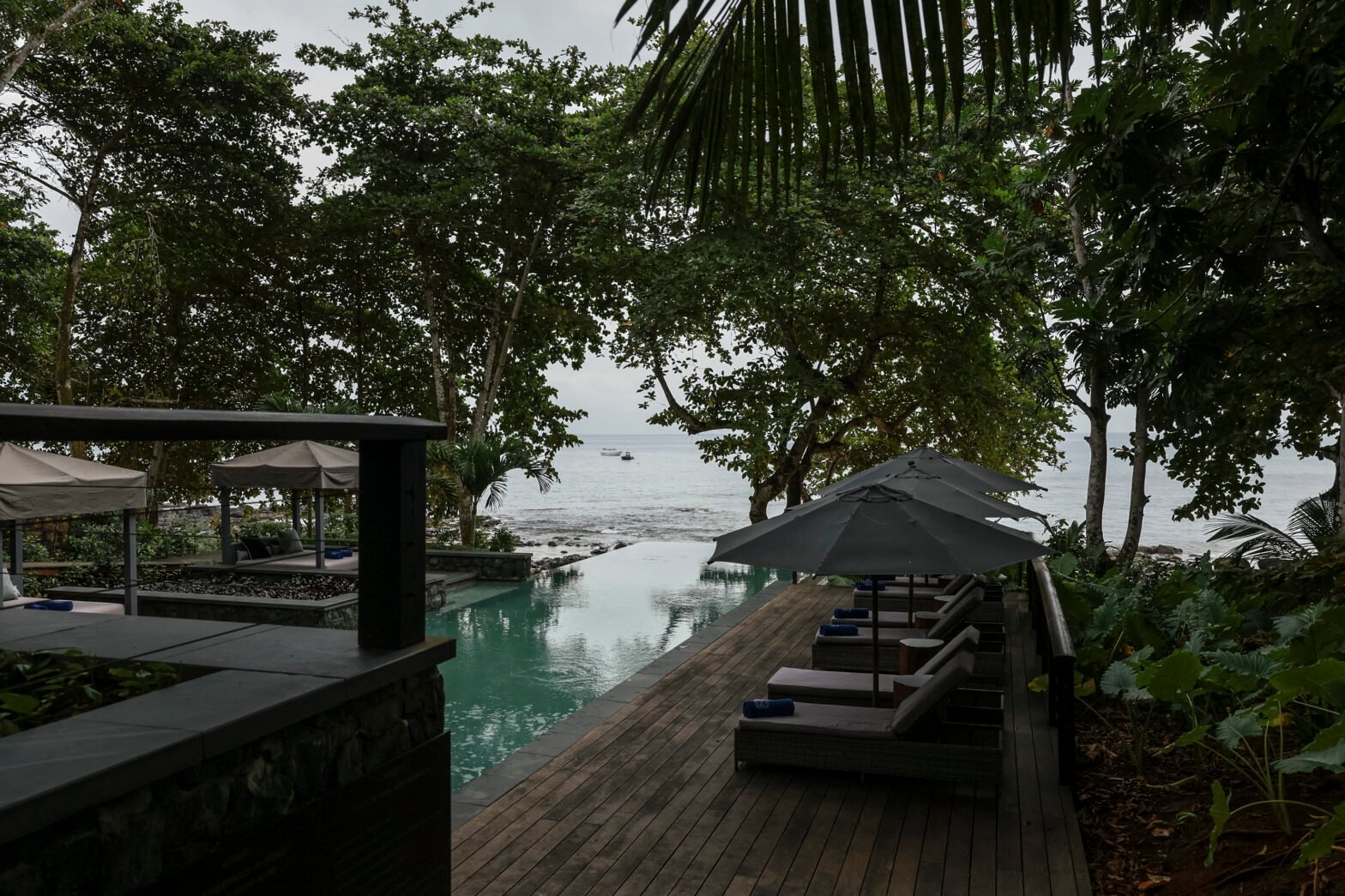
A night at Sundy Praia, on the Príncipe side of São Tomé and Príncipe, can cost more than $1,200. Two kilometers inland sits Roça Sundy, the former cocoa plantation that now carries a UNESCO title that reads like a charge sheet, “The Roças of São Tomé and Príncipe: Colonial Agricultural System and Forced Migration.” The World Heritage Committee inscribed Sundy alongside five other roças in July at its session in Busan, giving the archipelago its first listed property.
It also poses to the rest of us the question the hospitality industry has spent two decades sidestepping: What is a guest actually buying when a vacation comes attached to a plantation complex built on forced labor. The answer depends on which roça you book, who holds the concession, and whether anyone on the property will say the word “forced” out loud while you are standing in the courtyard where it applied.
What UNESCO Inscribed, And Why the Wording Matters
Portuguese planters built the roças as sealed agro-industrial worlds with their own hospitals, chapels, narrow-gauge rail, drying terraces, and manor houses, all of it running on serviçais shipped in from Angola, Cape Verde, and Mozambique under contracts they were rarely free to refuse. By the early 20th century, the archipelago had briefly become the world’s largest cocoa producer.
Henry Nevinson published his investigation of the labor system in 1905, and in March 1909, Cadbury, Fry, and Rowntree agreed to stop buying São Tomé cocoa, which is roughly the Edwardian version of a supply-chain scandal breaking on a Tuesday. UNESCO’s citation covers six estates: Monte Café, Água Izé, Diogo Vaz, São João, Sundy, and Belo Monte, listed under criterion (iv) for illustrating a colonial system built on forced migration and forced labor.
Roughly a hundred roças survive across the two islands, in conditions ranging from working farm to collapsing masonry. Emir Boa Morte, the Culture Ministry chief, told international news agency Agence France-Presse (AFP) that 10 more estates could reach the list within five to 10 years, and he frames the project plainly: “The story of these roças must be told.”
Inside The Roças That Became Hotels
Two of the six sit in the portfolio of HBD, the group founded by South African entrepreneur Mark Shuttleworth, whose Príncipe Collection runs Belo Monte and Roça Sundy. Belo Monte remains open to guests, while Roça Sundy is currently closed for an extensive restoration program. Egbert Bloemsma, HBD’s CEO, makes the economic case briskly. “We are creating beautiful hotels where hundreds of people can work,” he told AFP. “Nobody was using the old roças in the way they were supposed to be used in the old days.”
Where this turns uncomfortable is the sanzalas, the long terraces of workers’ quarters. AFP reports that the former plantation owner’s mansion at Sundy has already operated as a five-star hotel and that the workers’ houses will become additional guest rooms once the renovation is complete. Converting a manor house into a hotel is one proposition, and reopening the housing built for plantation laborers as guest bedrooms is a heavier one, workable only if the interpretation on site runs as deep as the plumbing.
Príncipe Collection at least commits the history to writing, acknowledging that the estates relied on contracted and forced labor. That tension also appears in UNESCO’s inscription decision, which calls for local communities to participate in decisions about the future of the roças, warns that private concessionaires’ economic interests should not take precedence over long-term preservation, and asks for clear rules governing conservation, rehabilitation, and reuse.
What To Ask Before You Book A Roça Stay
Conceição Vieira Moreno, 46, a member of the National Assembly, comes from a family of serviçais, contracted workers shipped from Cape Verde to the Sundy plantation. “My grandmother lived here, my father was born here, and I was born here too,” he told AFP. “It’s our heritage, in a way.” Ask whether descendants remain on the property, whether they were consulted on the restoration, and whether the guided walk covers the sanzala and the cemetery alongside the manor house and the cocoa terrace.
The mansion has already taken guests, and the sanzalas where the serviçais slept are next in line for renovation, which means the quarters Moreno’s family was shipped here to fill will soon take bookings. He is among the few who stayed on the site after HBD bought it, and he now reaches his own front door past a guardhouse and a barrier.