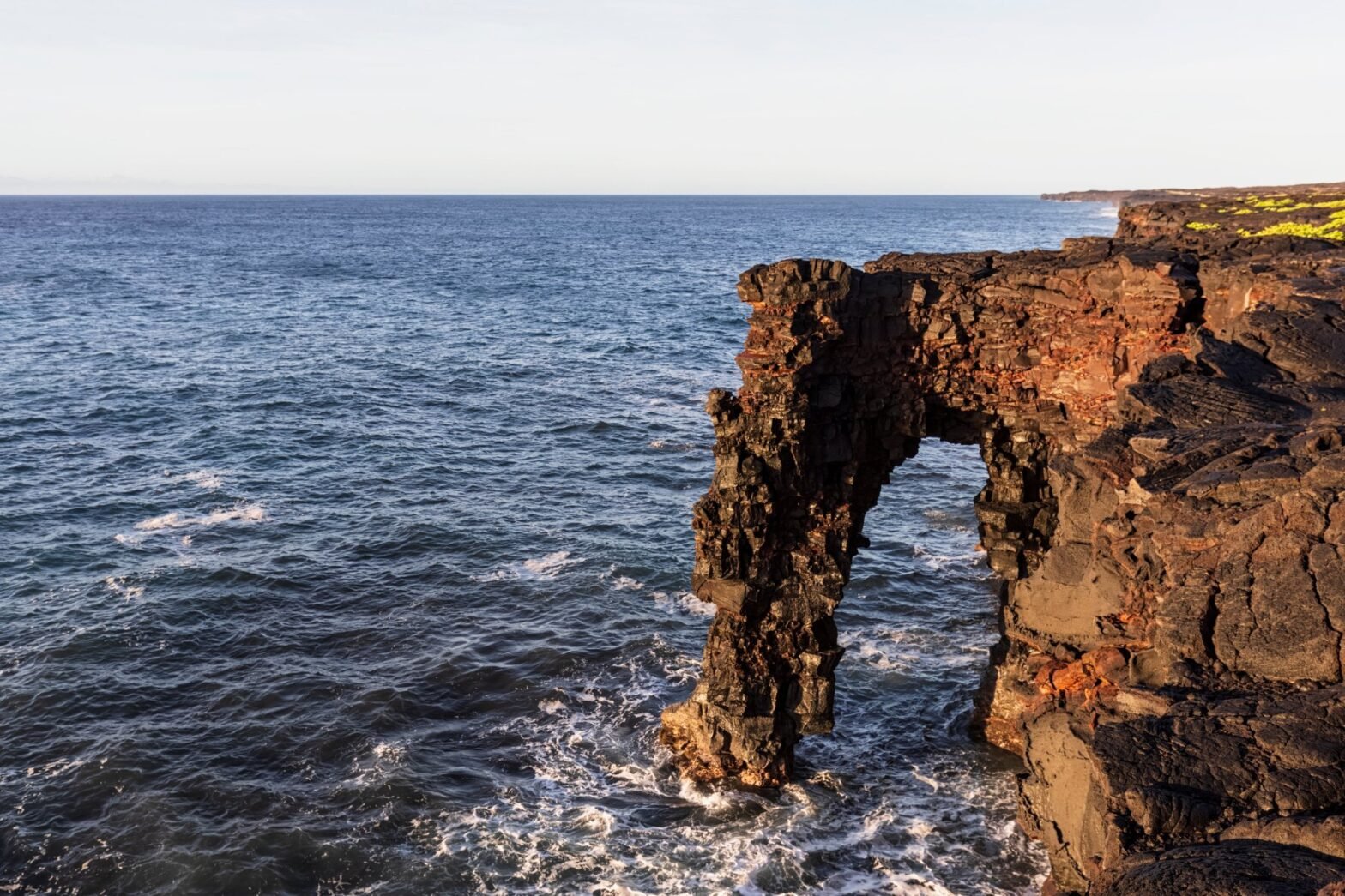
For years, visitors to Hawaii’s Big Island could drive nearly 19 miles down Chain of Craters Road, passing hardened lava fields and volcanic landscapes before reaching one of Hawaiʻi Volcanoes National Park’s most photographed formations. At the end of the road stood Hōlei Sea Arch, a 90-foot natural bridge of volcanic rock extending from the coastal cliffs into the Pacific Ocean. The landmark was a popular stop for visitors exploring the southern coastline, where centuries of volcanic activity and ocean erosion have continually reshaped the terrain.
Its viewing area offered a close look at the forces that created Hawaii’s rugged shoreline, though park officials had warned for years that the surrounding cliffs were unstable. Those warnings grew more urgent after earthquakes and powerful surf damaged the formation. Now, visitors making the familiar drive will find a dramatically different coastline. The National Park Service confirmed on October 1 that Hōlei Sea Arch has collapsed into the ocean, permanently changing one of the park’s best-known coastal attractions.
When Did Hawaii’s Hōlei Sea Arch Collapse?
According to the National Park Service, Hōlei Sea Arch stood on September 23, 2026, but had disappeared by the evening of September 27. Officials have not established the exact time of the collapse. The collapse may have occurred while the park was temporarily closed during Nolo’s passage near Hawaii. Officials have not determined whether the storm contributed to the collapse.
The arch had already suffered significant damage. Earthquakes during the 2018 Kīlauea eruption and summit collapse weakened nearby coastal cliffs. In January 2020, newly discovered cracks forced park officials to close the original viewing area. Park officials opened a replacement observation area in March 2020, about 1,000 feet beyond the gate at the end of Chain of Craters Road. Later that year, powerful surf associated with Tropical Storm Darby broke away part of the arch’s lower structure.
Hōlei Sea Arch formed approximately 550 years ago as waves gradually eroded the volcanic cliffs along Hawaii’s coastline. The National Park Service explains that constant wave action carves caves into coastal rock, eventually creating openings that develop into arches. Over time, the same process weakens the remaining rock until it collapses, as it did at Hōlei Sea Arch.
What The Collapse Means For Visitors To Hawaiʻi Volcanoes National Park
The disappearance has also raised safety concerns. In its October 1 statement, the National Park Service warned that people entering the restricted area were putting themselves and first responders at risk of falling or drowning. “Visitors are required to stay out of closed areas and away from cliff edges which are unstable and can collapse without warning,” the agency said.
Despite the landmark’s disappearance, Chain of Craters Road remains an attraction in its own right. The National Park Service’s driving guide describes an 18.8-mile route from the Kīlauea summit area toward the coast, with stops overlooking lava fields, volcanic features, and the Pacific Ocean.
One stop is Puʻuloa Petroglyphs, an archaeological site with thousands of ancient Hawaiian rock carvings. Kealakomo Overlook also provides views across the volcanic landscape toward the ocean. Visitors interviewed by Hawaiʻi Public Radio after the collapse said the coastal scenery remained impressive even without the famous formation. Travelers planning to explore the coastline should check current park conditions and closures before making the drive.