Anyone who paired Paris with Milan for late September 2026 learned a useful lesson in two-country vacation planning before leaving home. Planned infrastructure work has suspended direct trains between the two cities from September 12 through October 9, sending travelers searching for alternative routes. A trip that ordinarily fits neatly between two major cities suddenly requires extra connections and more of the day.
Multi-country trips can lose hours in ways that barely register when you are booking them. A route that looks simple on a map can mean an awkward connection, a long transfer, or doubling back through a city you already left, so it pays to work out the journey between stops before locking in the rest.
Book An Open-Jaw Flight Before Building The Rest Of The Trip
Instead of automatically booking a round-trip ticket, start by pricing an open-jaw itinerary that brings you into one city and flies you home from another, usually found under the “multi-city” option on airline websites and flight search engines. Thrifty Traveler’s guide to open-jaw flights shows how the structure works across Google Flights and major airline booking sites.
A London-and-Paris itinerary, for example, works cleanly when the traveler flies into London, takes the Eurostar to Paris, and returns home from Paris. Booking a conventional London round trip forces another journey back across the Channel solely to reach the original departure airport, adding transportation costs and several hours of backtracking.
Scott Keyes, founder and chief flight expert at Going, has called open-jaw flights “fantastic for seeing two destinations in one trip without backtracking,” and the useful comparison extends beyond the airfare displayed on screen. A round trip that looks cheaper can become the more expensive option after adding the train or flight back to the first city, local transportation, baggage fees, and possibly another hotel night.
Looking at the route on a map before purchasing anything also exposes combinations that make little geographic sense. The arrival airport should sit near the beginning of the vacation, the departure airport near the end, and the international transfer should move the traveler forward instead of creating an unnecessary transportation triangle.
Use Rail To Make A Two-Country Vacation Easier
After you book flights, look closely at how you will actually get from the first country to the second. A cheap early-morning flight between countries can take up far more of the day than the flight time suggests once you add airport transfers, security, boarding, baggage claim, and the journey into the next city.
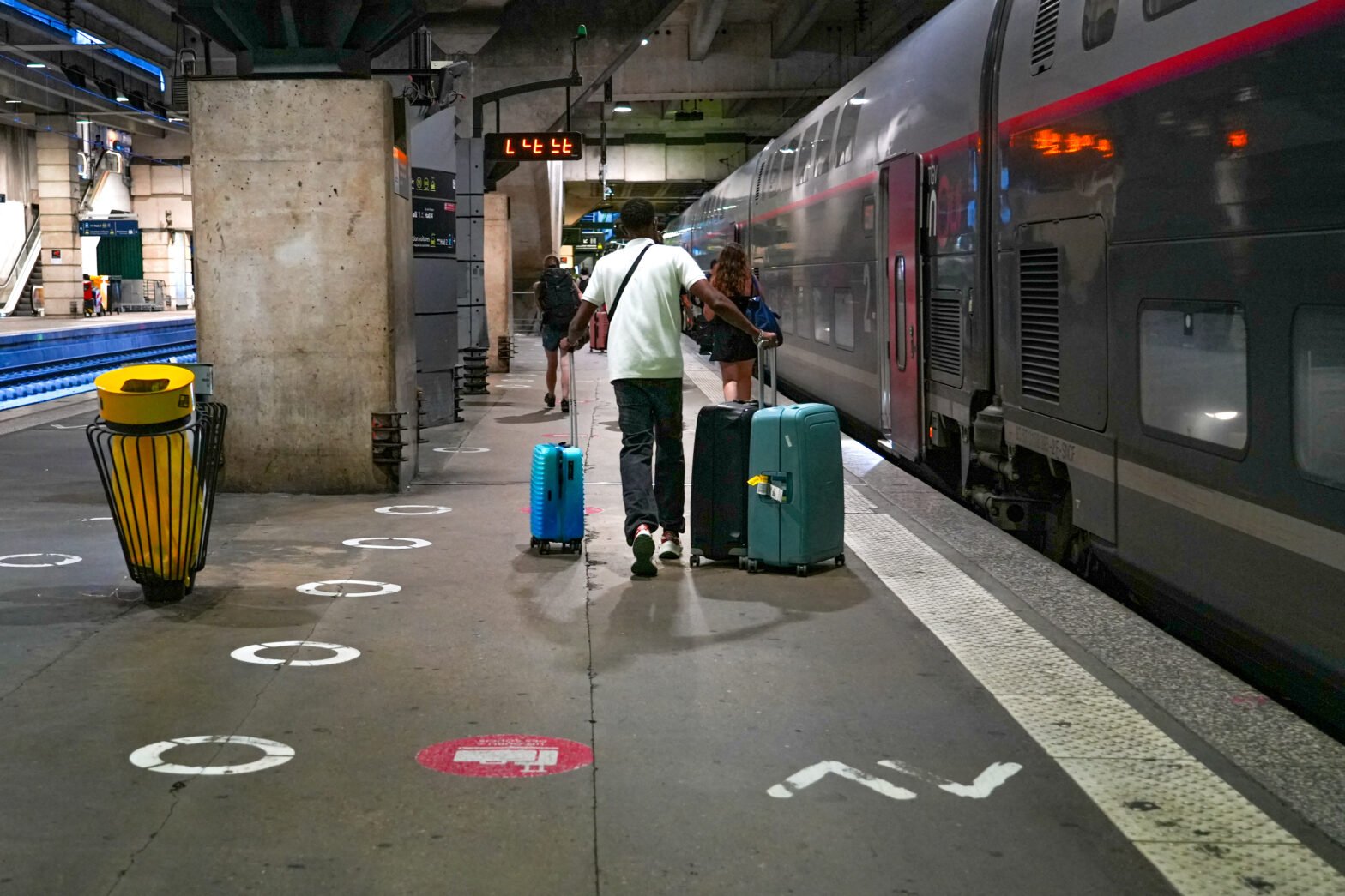
For routes with strong rail connections, trains can preserve far more of the day by moving passengers between city centers, while overnight trains combine transportation with accommodation. ÖBB’s new-generation Nightjet serves routes linking Munich, Salzburg, and Vienna with Bologna, Florence, and Rome, with options ranging from couchettes and Mini Cabins to private sleepers with their own shower and toilet.
According to The Man in Seat 61, the rail-travel site by Mark Smith, fares on the new-generation Nightjet start at €58.20 ($67) for a couchette or Mini Cabin, €107.40 ($124) for a berth in a two-person Comfort sleeper, and €159 ($183) for a single-bed sleeper, with dynamic pricing pushing popular departures higher. Smith writes that “travelling in these sleepers is a delight,” calling them “perhaps the best-designed sleeper compartment on any European sleeper train.”
On a short vacation, an overnight train can save hours by moving you between countries while you sleep, so you leave one city in the evening and arrive in the next with most of the following day still available. Daytime rail can be just as efficient on shorter routes, with Copenhagen and Malmö, Vienna and Bratislava, and Brussels and Paris all close enough by train to fit the transfer into part of a morning.
Checking the specific timetable before booking the second hotel remains essential, since engineering work, seasonal schedules, and reduced weekend service can transform an elegant route. The current Paris-Milan disruption is a useful reminder that a route’s normal travel time means little when your vacation dates fall during scheduled construction.
Protect Separate Tickets With A Real Connection Buffer
Travelers building the international leg from separate reservations also need to understand what happens when the first service arrives late, because two bookings that align perfectly on a screen can leave the traveler responsible for the onward connection. When the entire trip sits on one protected ticket, disruption usually comes with clearer carrier obligations; when unrelated tickets were purchased independently, a missed departure can become the traveler’s problem.
European regulators are trying to simplify some of that complexity, and in May 2026 the European Commission proposed new rules intended to make multi-operator rail journeys easier to purchase as a single ticket. The Commission described its goal as “one journey, one ticket, full rights,” including assistance, reimbursement, rerouting, and compensation when disruption causes a missed connection. However, the proposal still has to pass through the EU legislative process.
Until that protection becomes more consistent, build enough connection time into the itinerary to absorb a delay without losing the next leg. A 90-minute buffer between separately booked trains gives an incoming service some room to run late at a major station. Separately ticketed flights need considerably more time, especially when you must collect checked bags or the next departure leaves from another terminal.
A successful two-country vacation ultimately depends less on squeezing another country into the itinerary than on designing the seam between the two destinations properly. Arrive at one end, keep moving forward, make the border crossing useful, and fly home from wherever the route naturally finishes.