Temwa Chawinga was already one of the biggest names in American women’s soccer before this summer. The Kansas City Current forward has won the NWSL Golden Boot and MVP award in back-to-back seasons, becoming the first player in league history to win consecutive MVP titles. Her older sister, Tabitha, captains Malawi and plays for OL Lyonnes after a career that has taken her through Sweden, China, Milan, and Paris. This summer, what changed was the national team around them.
On August 9, Rose Kadzere found space in the Ghanaian box in the 79th minute and scored the goal that sent Malawi, making its Women’s Africa Cup of Nations debut, past Ghana 2-1 and into the 2027 FIFA Women’s World Cup in Brazil. The Scorchers, the nickname for Malawi’s women’s national soccer team, had already beaten defending champion Nigeria 3-2 and went on to defeat Algeria 3-1, with two goals from Tabitha and one from Temwa, before Cameroon won the final 3-0 on August 16.
For Malawi’s tourism industry, the timing is useful. World Travel & Tourism Council figures reported by the Malawian newspaper The Nation put international visitor spending at $49.3 million in 2025, accounting for just over 6% of tourism spending in the country. The Scorchers’ run has now put Malawi in front of football audiences across dozens of countries before the team has even reached Brazil.
The Country Has Been Selling Itself To Itself
Tulipo Mwenelupembe, who ran marketing at the Football Association of Malawi (FAM) until last year and now works as a sports marketing consultant, has watched that exposure develop from inside the game.
“This is a watershed moment for Malawi football,” he told Travel Noire. “We have not had many international success stories of this magnitude, and the Scorchers are undoubtedly one of our biggest in recent years.”
The scale of that exposure became clear by the final, when the Confederation of African Football (CAF) made the match available live in more than 85 countries, with broadcasters including beIN Sports across North America, DAZN in Germany and Spain, and Channel 4 in the United Kingdom. That international audience lands on a tourism sector still heavily dependent on domestic travel. The same WTTC figures put international visitor spending at $49.3 million in 2025, while World Bank research reported by The Nation found that domestic travelers generated 95% of Malawi’s tourism revenue in 2024.
Air access remains one of the constraints. Innocent Kaliati, managing director of Orbis Destination Management Company, told The Nation, “We don’t have direct flights to Malawi and neither do we have major airlines flying in. International tourists fly from Europe into our neighbouring countries. Until we are accessible, unlocking international traffic will be difficult.”
Even within that limited network, July brought a new connection from Lyon, where Tabitha plays her club football. Ethiopian Airlines began operating three weekly services from the French city via Geneva to Addis Ababa, with Lilongwe and Blantyre also served from the Ethiopian capital. The route places one of the European cities most closely associated with a Malawian football star inside the same airline network as her home country.
Mwenelupembe sees the Chawingas as an obvious part of Malawi’s wider story heading into the World Cup.
“The Chawinga sisters, for example, have become recognisable figures in international women’s football. Their stories could be incorporated into a broader ‘Visit Malawi’ campaign, particularly in the build-up to the FIFA Women’s World Cup in Brazil.”
Following The Chawingas North To Rumphi

Asked what he would tell someone encountering Malawi through the Scorchers for the first time, Mwenelupembe kept it to two things.
“The lake. The people.”
Lake Malawi takes up close to a quarter of the country’s territory and contains an extraordinary concentration of freshwater fish species, particularly cichlids found nowhere else. Its southern end sits inside Lake Malawi National Park, a UNESCO World Heritage Site since 1984. Malawi’s UNESCO list also includes Chongoni Rock-Art Area, with 127 rock-art sites, and Mount Mulanje Cultural Landscape, added in 2025.
Both sisters grew up in Rumphi, in northern Malawi, before their football careers took them abroad. Tabitha moved to Sweden in 2014 and scored 39 goals in 18 matches during her first season, before later playing in China, Italy, Paris, and Lyon. Temwa also built her career through Sweden and China before joining Kansas City Current.
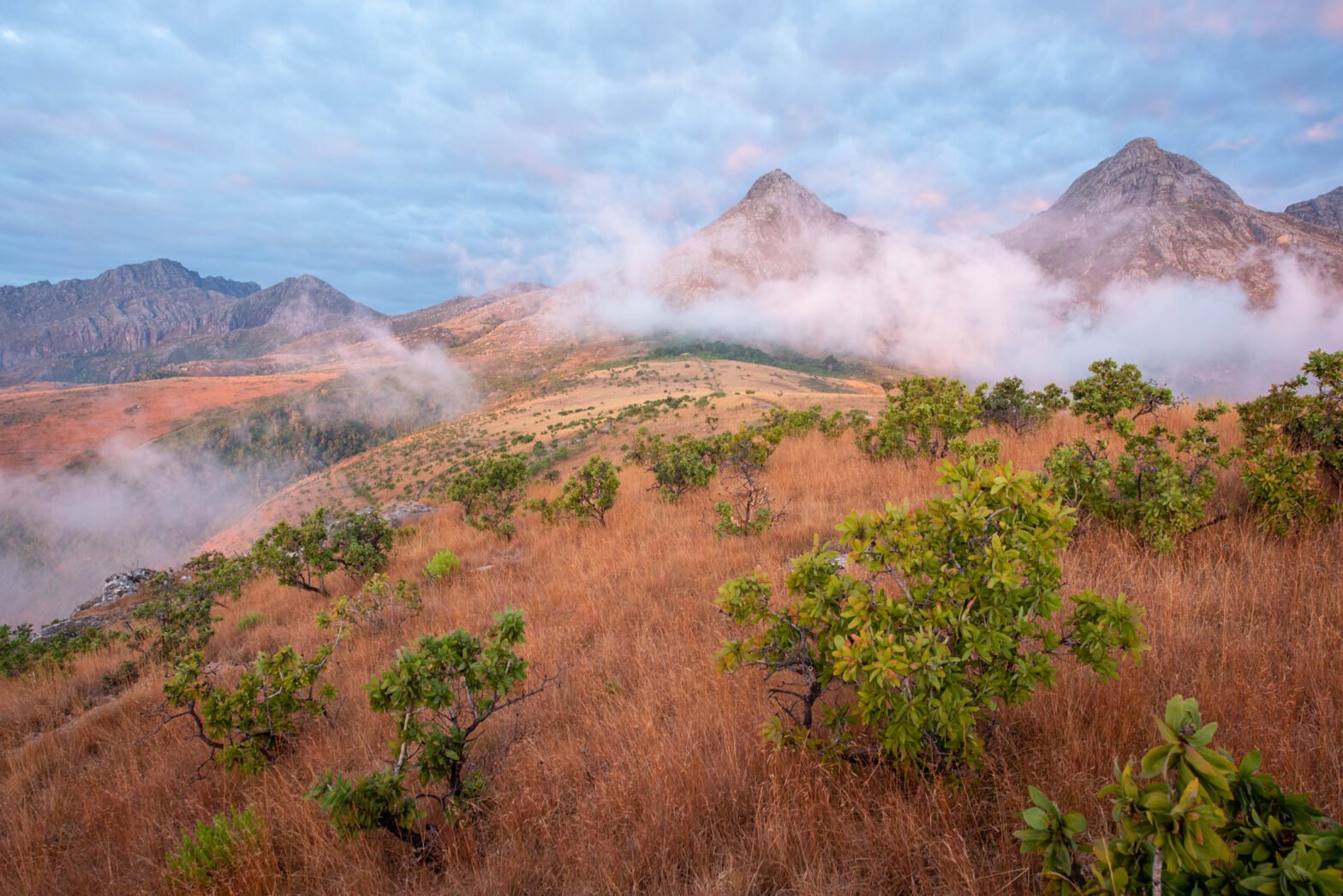
Traveling north from Lilongwe brings visitors through Mzuzu and Rumphi toward Nyika National Park and Vwaza Marsh Wildlife Reserve, with the northern lakeshore also within the wider route. Mzuzu serves as a base for exploring the region, while Nyika spans a high-altitude plateau of grasslands and forest known for roan antelope, zebra, leopard, and more than 400 recorded bird species. Northwest of the city, Vwaza combines marshland and open plains where elephants, hippos, and birdlife are among the main draws. For fans who first encounter Malawi through the Chawinga sisters, the route connects their interest in the players to places they can actually visit. Mwenelupembe wants to create more reasons for those fans to make the trip.
“We could invite some of the world’s leading women’s football teams to play the Scorchers in Lilongwe,” he said. “Such international fixtures would not only give the team valuable competition but also create a platform to showcase Malawi’s tourism, culture and hospitality to global audiences.”
Between Now And Brazil
Working against that tourism push is an entry policy Malawi changed earlier this year. The broad visa waiver introduced in 2024 was revoked on January 2, 2026, and most nationalities now require visas. Travelers from 160 countries and territories, including the United States, United Kingdom, and Canada, are eligible for visas on arrival. In comparison, nationals of 47 countries must secure a visa or prior authorization before departure. Malawi’s government also operates an eVisa portal for travelers applying before their trip.
For travelers applying online, Malawi’s Department of Immigration lists the single-entry visa at $75. A six-month multiple-entry visa costs $150, while a 12-month multiple-entry visa costs $250. Money is also beginning to move around the Scorchers at home. Alongside NBS Bank’s K245 million reward, the Ministry of Sports organized a homecoming in Lilongwe after the team returned from Morocco, while FAM’s warning over unauthorized commercial use of the Scorchers shows how quickly their name and image have acquired value. Mwenelupembe says the football program must now build on the breakthrough.
“As a football nation, we need sustained investment beyond the World Cup. That means investing in academies and youth teams to develop the next generation of female football stars, improving sports infrastructure and strengthening technical programmes to professionalise women’s football.”
The next generation is already moving through Malawi’s football system. The FAM lists Maggie Chombo-Sadiki as head coach of the country’s under-20 women’s national team, the Young Scorchers. Her team beat Guinea-Bissau 6-2 on aggregate before falling to Nigeria 3-2 on aggregate in the final African qualifying round for the FIFA U-20 Women’s World Cup.
Brazil now gives the senior Scorchers a fixed date on the international calendar and Malawi a year to decide how far that visibility can travel. Home fixtures in Lilongwe, clearer visitor information, stronger air links, and itineraries that take football fans beyond the capital and into places such as Rumphi, Nyika, and Lake Malawi could give supporters reasons to experience the country before or after they watch the team in Brazil. The World Cup will introduce the Scorchers to an even larger audience. Malawi’s opportunity is to make sure some of that audience eventually arrives there.