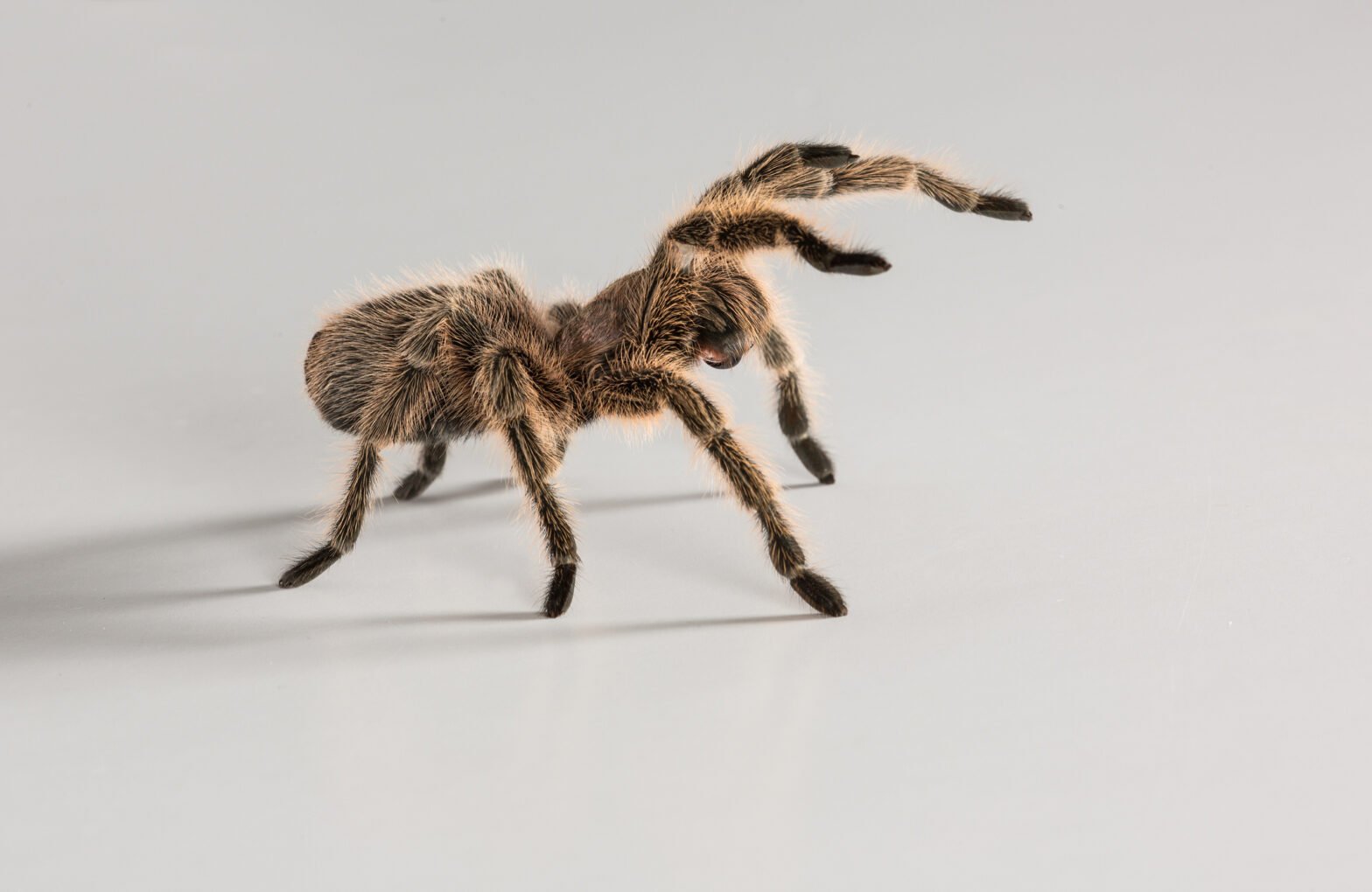
Peruvian authorities investigating suspected wildlife smuggling at Lima’s Jorge Chávez International Airport have reported a much larger seizure than first announced. Wildlife officers initially counted more than 3,000 tarantulas hidden in socks inside three suitcases. A subsequent count by Peru’s National Police put the total at 12,796 animals, according to Infobae. The luggage belonged to three foreign travelers preparing to fly to Germany. Police detained the passengers, two German citizens and a Polish citizen, after receiving information that helped identify the suspects before departure.
Investigators are tracing how the spiders were collected and moved through Peru, and whether other people were involved. Specialists are also working to identify the recovered specimens, including some that may belong to species scientists have not yet formally described. Authorities are reviewing financial transactions and social media accounts as part of their inquiry into the suspected transportation of wildlife out of the country. The investigation remains ongoing, and the allegations have not been proven in court.
How Police Discovered Thousands Of Tarantulas Hidden In Socks
As Agence France-Presse (AFP) reported, customs agents noticed movement inside the travelers’ luggage during an inspection. Officers discovered spiders at different stages of development, including eggs, hatchlings, and adults.
“Concealed in socks inside three suitcases, we found the tarantulas in different stages of life, from eggs and hatchlings to adults,” Cora Suárez, a wildlife control technician with Peru’s National Forest and Wildlife Service (SERFOR), said in an agency statement reproduced by AgroPerú.
The animals reportedly came from regions including Junín, Loreto, Cajamarca, Cusco, and La Libertad. Specialists identified several tarantula species, including Pamphobeteus antinous, which Peru classifies as vulnerable. Wildlife authorities plan to transfer the recovered animals to an authorized breeding facility after completing their assessments.
What Permits Do Travelers Need To Transport Live Animals Internationally?
International wildlife transportation is subject to national regulations and, for certain species, the Convention on International Trade in Endangered Species of Wild Fauna and Flora (CITES). Under CITES, Appendix I generally requires both import and export permits and restricts commercial trade. Appendix II generally requires an export permit or re-export certificate, although destination countries can impose additional requirements.
However, CITES does not cover every protected species. As Mongabay explains, none of the tarantula species identified in the Peru seizure appear on the CITES lists. Some, including Pamphobeteus antinous, receive protection under Peruvian law. An animal can therefore be subject to national collection and export restrictions without having international CITES protections.
For travelers entering or leaving the United States with wildlife, the U.S. Fish and Wildlife Service outlines declaration, inspection, and permit requirements. Travelers must also comply with applicable destination-country regulations and airline restrictions. Airline permission to transport an animal does not replace government authorization.
How Wildlife Trafficking Differs From Legally Traveling With A Pet
International travel with a legally owned dog or cat generally involves veterinary and entry requirements. The U.S. Department of Agriculture (USDA) advises owners to check destination-specific rules covering vaccinations, microchips, health certificates, and disease testing. Domestic dogs and cats are generally exempt from U.S. Fish and Wildlife Service import-export regulations, although other entry requirements still apply.
Exotic pets face additional restrictions. The U.S. Fish and Wildlife Service requires permits for certain CITES-listed pets traveling internationally, even when their owners have no intention of selling them. Owners may also need documentation proving how they legally acquired the animals.
These requirements help authorities distinguish legal pet travel from unauthorized wildlife transportation. Collecting, possessing, or moving wild animals in violation of applicable laws can lead to criminal charges. Peru’s judiciary states that illegal wildlife trafficking offenses can carry three to five years in prison, along with financial penalties.
The consequences could be more severe for those involved in the airport seizure. Police General José Manuel Cruz Chamba told Panamericana TV’s 24 Horas that suspects could face 11 to 20 years in prison if investigators establish the alleged offenses, as detailed by Infobae.
Similar offenses can carry prison sentences in the United States. Certain felony violations of the Lacey Act can carry penalties of up to five years in prison and a $250,000 fine, as outlined by the Department of Justice. Travelers planning to fly with exotic animals should check the species’ legal status, proof of ownership, export and import permits, veterinary requirements, and airline policies before departure.